Landscaping in Centerville, Utah
The steepest bench in the county.
Centerville rises fast off the valley floor into the Wasatch, and the east-side neighborhoods climb rocky ground below Deuel Creek and Parrish Creek where the soil can change within a single property line. Here the retaining wall is not a feature of the project — it is the project.
The Ground in Centerville
What this site is going to ask for.
Elevation
4,300 ft
- Climate
- The steep east exposure gives Centerville a microclimate of its own. Cold air drains off the Wasatch at night and pools against the slope, and the canyons behind town — Deuel, Parrish — funnel wind down onto the upper-bench lots harder than the valley floor sees. Afternoons are full sun and hot; the frost-free season tracks the valley, but the exposed upper benches read a little colder and a little windier than the numbers suggest.
- Soil
- This is the most abrupt ground in Davis. The upper bench is steep alluvial fan — Deuel and Parrish creeks dropping cobble, rock, and coarse gravel out of the canyons — laid over Bonneville shoreline deposit, and it can shift from workable soil to immovable rock within one lot. Lower down and to the west it fines into the heavier clay of the valley floor that holds water and heaves. A single sloped property can carry both.
- Terrain
- Short, steep lots that climb hard to the east, dropping fast to the street. Usable outdoor space has to be cut and held before it can be anything else, which makes these projects structural first and decorative second — retaining, the drainage behind the retaining, and a grade that sheds water away from the house through every season. Access is often tight and the rock is close to the surface, so the equipment plan drives the build plan.
- Local
- Culinary water comes through Weber Basin; landscape irrigation runs on pressurized secondary from Centerville Deuel Creek Irrigation. Centerville City reviews site plans and applies added scrutiny to hillside and steep-slope work, where cut, fill, and wall height are all regulated — walls over four feet, or shorter walls carrying a slope or a drive above them, are engineered and permitted. On this bench, hydrostatic pressure behind a wall is the failure mode designed against first.
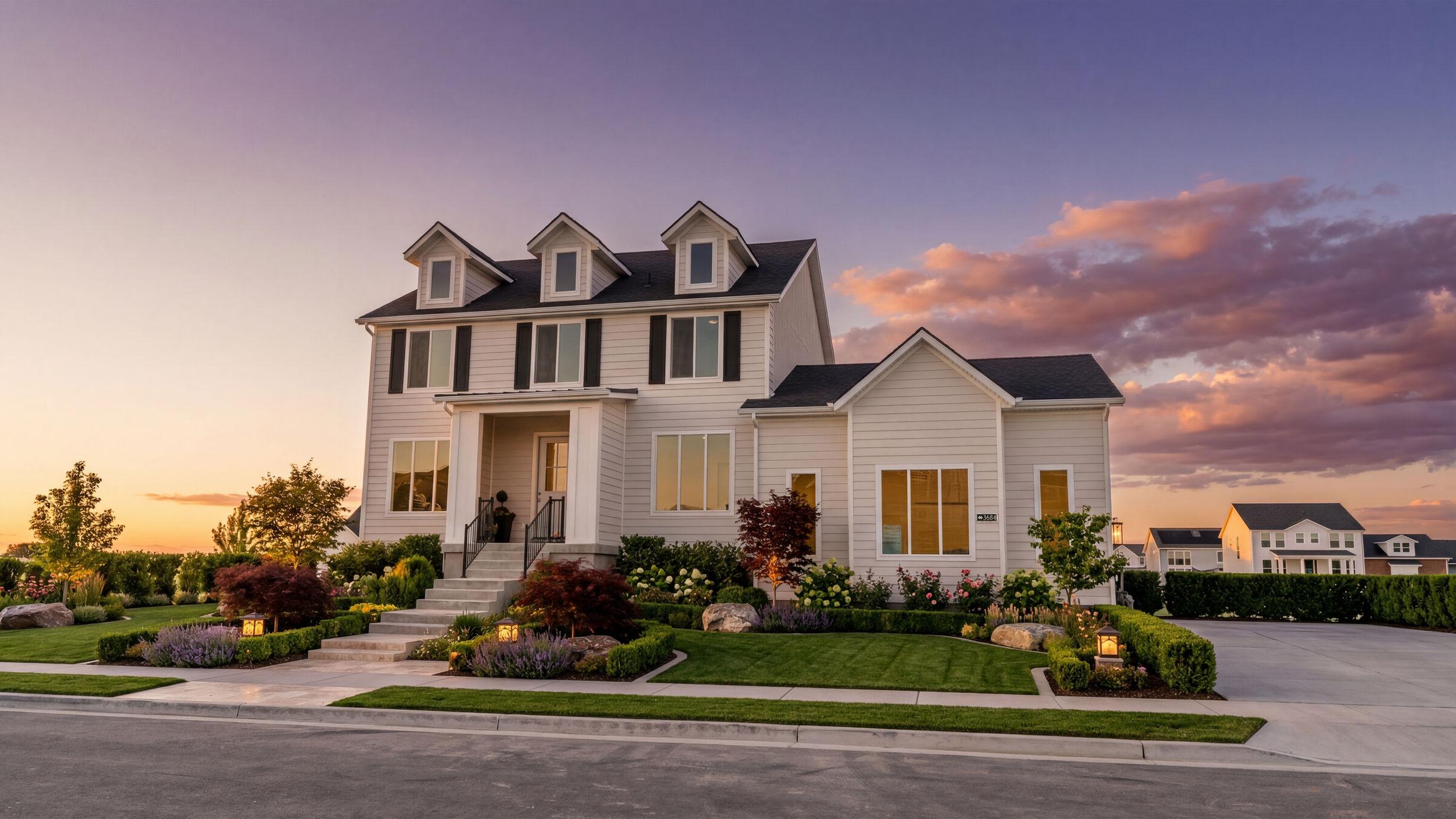
Where in Centerville
We build across the whole city.
From bare-ground new builds to established gardens being rebuilt, across these Centerville neighborhoods and the streets around them.
- East Bench
- Deuel Creek
- Parrish Lane
- Chase Lane
- Pages Lane
Near Deuel Creek Trail, Centerville Canyon, Parrish Creek, Founders Park.
What We Build in Centerville
Seven disciplines, one crew, sequenced to this ground.
Every Centerville project starts with grading and drainage, then runs through retaining walls, hardscape, planting, lighting, and water. In Centerville that often means a waterwise approach from the first drawing.
Common Questions
Landscaping in Centerville.
- The Centerville bench is heavy and rocky. Why does that matter for a retaining wall?
- Because a wall here is a drainage structure that happens to hold soil. Native clay backfilled against the block holds water and turns the wall into a dam, so the assembly is built around clean drainage stone and a daylighted collector pipe before the first course is set. On rocky, sloped ground the leveling pad and the reinforcement behind the face carry the hillside — the block is the least of it.
- Our lot climbs steeply. Can you build usable flat space out of it?
- That is most of what we do here. A steep bench lot gets cut and terraced into level ground that is retained and drained, so the grade becomes an opportunity rather than a limit. The structure is engineered and built first; the finish follows it.
- Does the runoff from Deuel and Parrish creeks affect the bench neighborhoods?
- It sets the drainage strategy. Canyon runoff arrives as sustained spring flow, and an upper-bench site is graded and piped to carry that water through and past the property to a defined outlet — never into a gravel pit in clay, which becomes a bathtub, not a drain.
- What does the first conversation involve?
- Where the lot sits, what the grade does, how you want to use the space, and the range you have in mind. We will tell you what the ground is likely to ask for before anyone talks about a design.
- Do you work year-round in Centerville?
- Our crews run year-round. Installation concentrates in the April-to-October window when the ground is workable, while design, site reading, and scheduling carry on through the winter — which is the best time to get a spring start held.
Also in Davis County
Other areas we serve
Tell us about the site in Centerville.
Where the lot sits, what the grade does, and what you want out of it. We'll tell you what the ground is going to ask for before anyone talks about a design.
Start a Project