Discipline 03 — Northern Utah
Patios & Hardscape
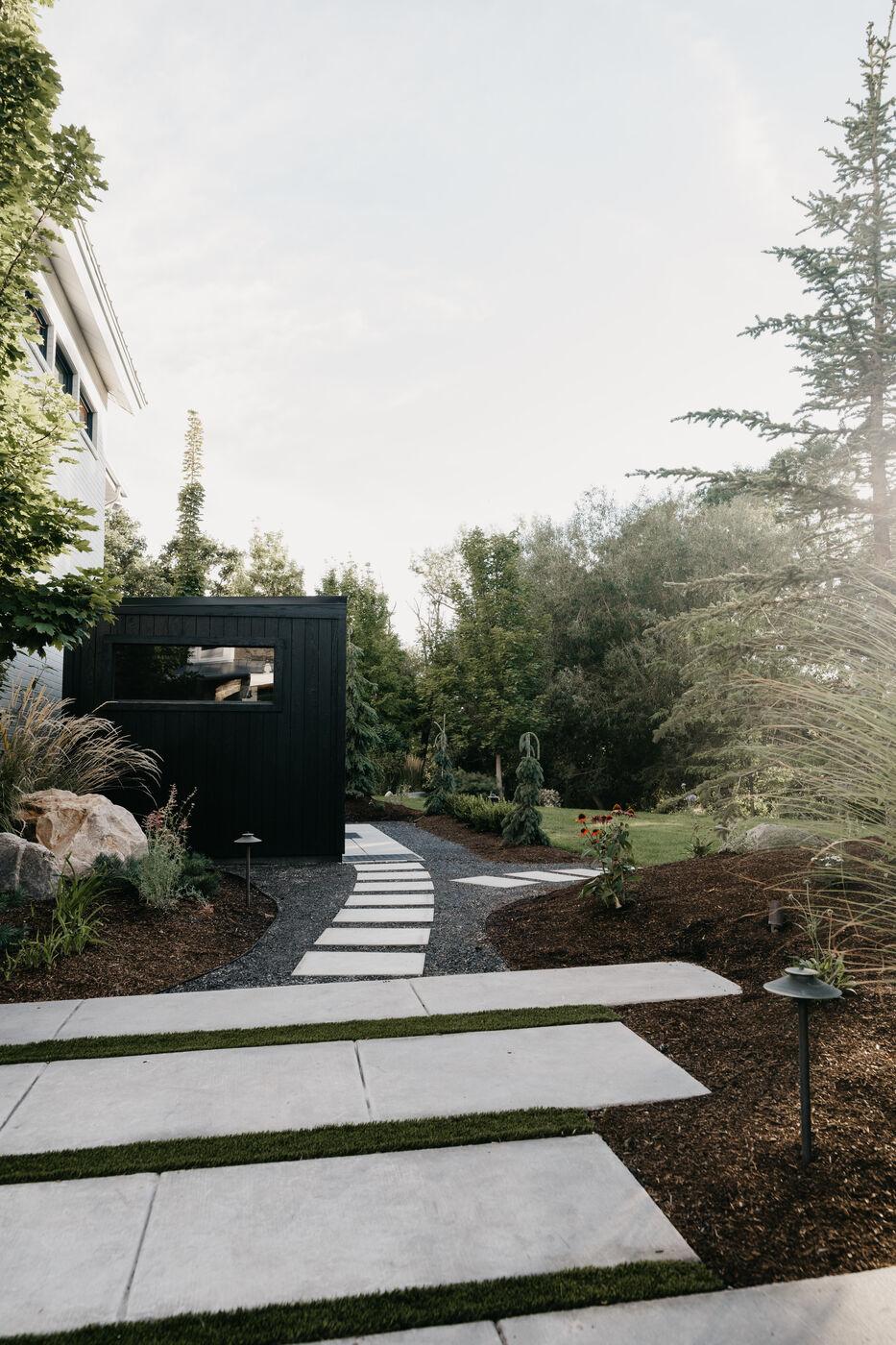
A patio is a structure. What you walk on is the finish; what determines whether it is still flat in a decade is six inches of compacted aggregate you will never see.
The Craft
What the work actually is.
Northern Utah runs through dozens of freeze-thaw cycles in a season. Water that sits in a base course expands roughly nine percent every time it freezes, lifts whatever is above it, and leaves a void behind when it melts. Repeat that forty times a winter and a patio built on the wrong base becomes a patio with a story about how it used to be flat.
The answer is not more stone. It is a base that drains and does not move: subgrade compacted before anything goes on it, separation fabric over clay so the base and the subsoil never mix, then four to six inches of road base for a patio — more for a driveway — placed and compacted in lifts rather than dumped and rolled once.
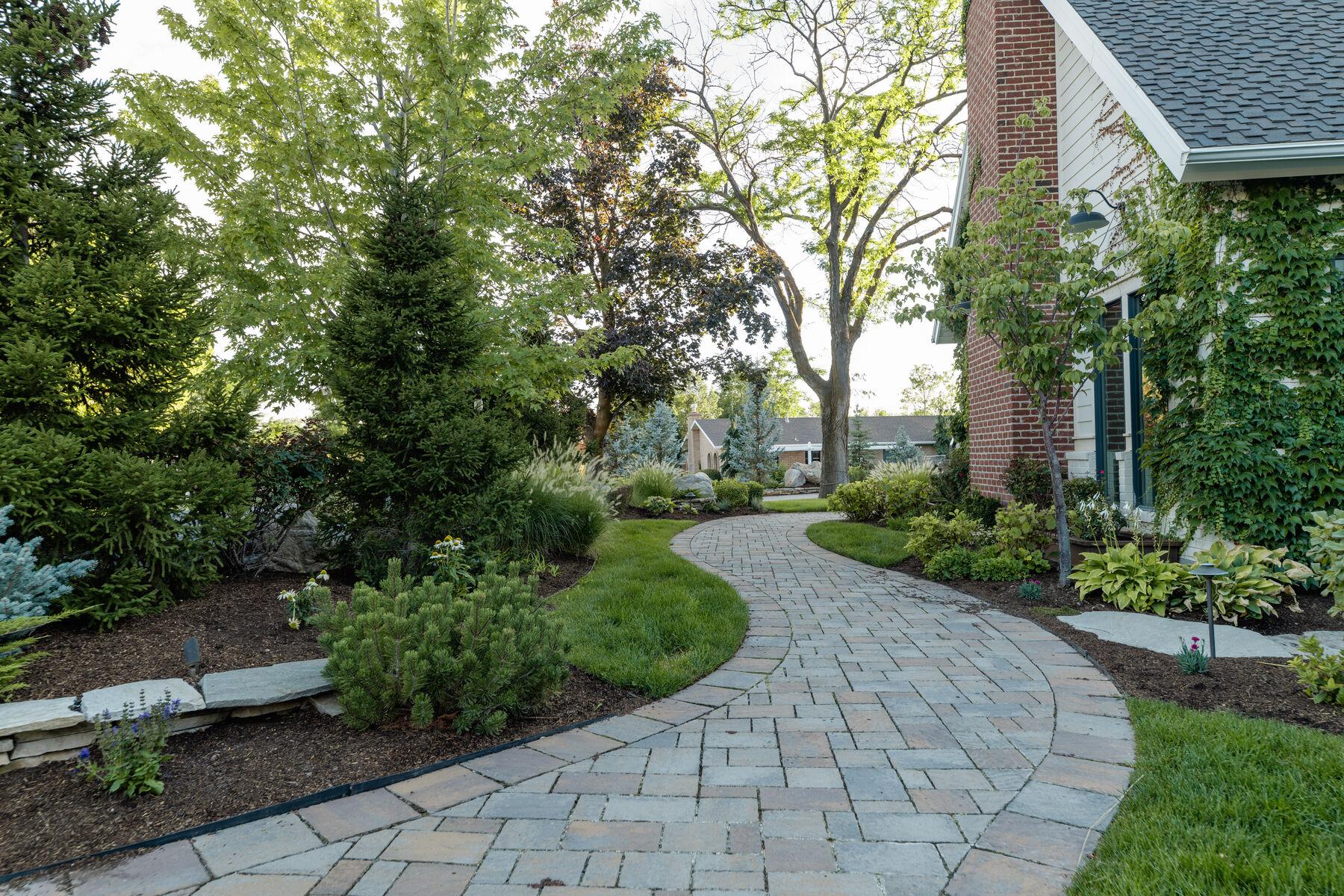
Above that, a one-inch bedding course of washed coarse sand or clean angular chip, screeded to grade and never compacted before the stone goes down. Then the pavers, then edge restraint on every open edge, then joint material swept in and the whole field plate-compacted through a protective pad. Every one of those steps has a shortcut, and every shortcut shows within three winters.
What Goes Wrong
The failures we are hired to undo.
None of these are unlucky. Each one is a decision made earlier by someone working faster than the ground allowed.
- 01
Edge restraint left out
The perimeter is the only place a paver field can move. Without restraint spiked into the base, the outer courses creep, the joints open, and the failure works its way inward.
- 02
Bedding sand carrying fines
Unwashed sand holds water against the underside of the stone, heaves in freeze-thaw, and gives weed seed exactly the growing medium it wants. The material has to be washed.
- 03
Surface pitched toward the house
It happens when the patio is set to the door threshold rather than to a designed fall. One percent — about an eighth of an inch per foot — away from the structure is the minimum, and it should be checked, not assumed.
- 04
Base compacted once, at the end
Aggregate compacts in lifts or it does not compact. Six inches placed and rolled once is a loose six inches with a firm crust on top.
- 05
Wet-set stone on an unreinforced slab
Flagstone mortared to a slab that moves will crack along the mortar joints. If stone is going down wet-set, the slab under it has to be built for this climate first.
Materials & Method
How we build it instead.
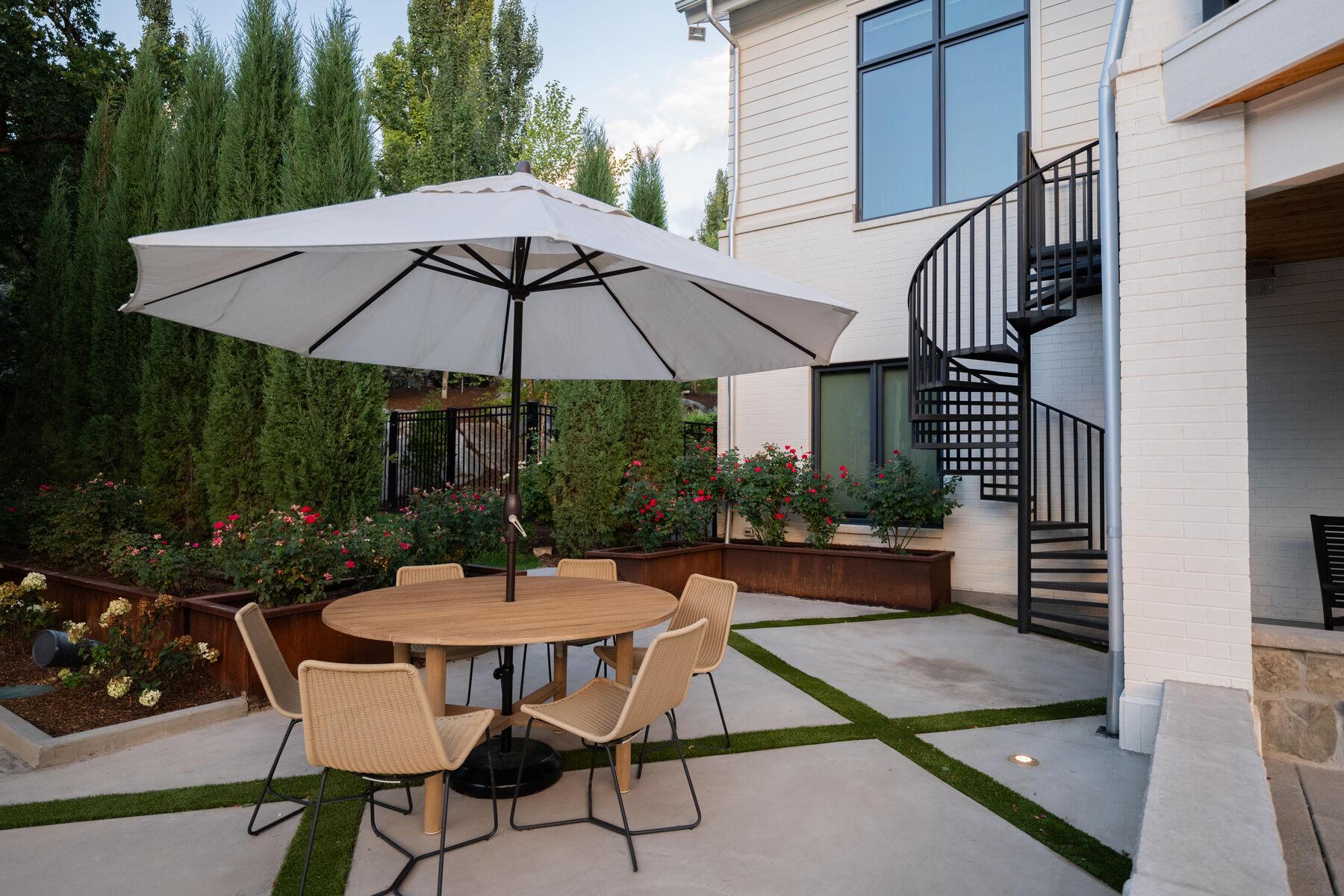
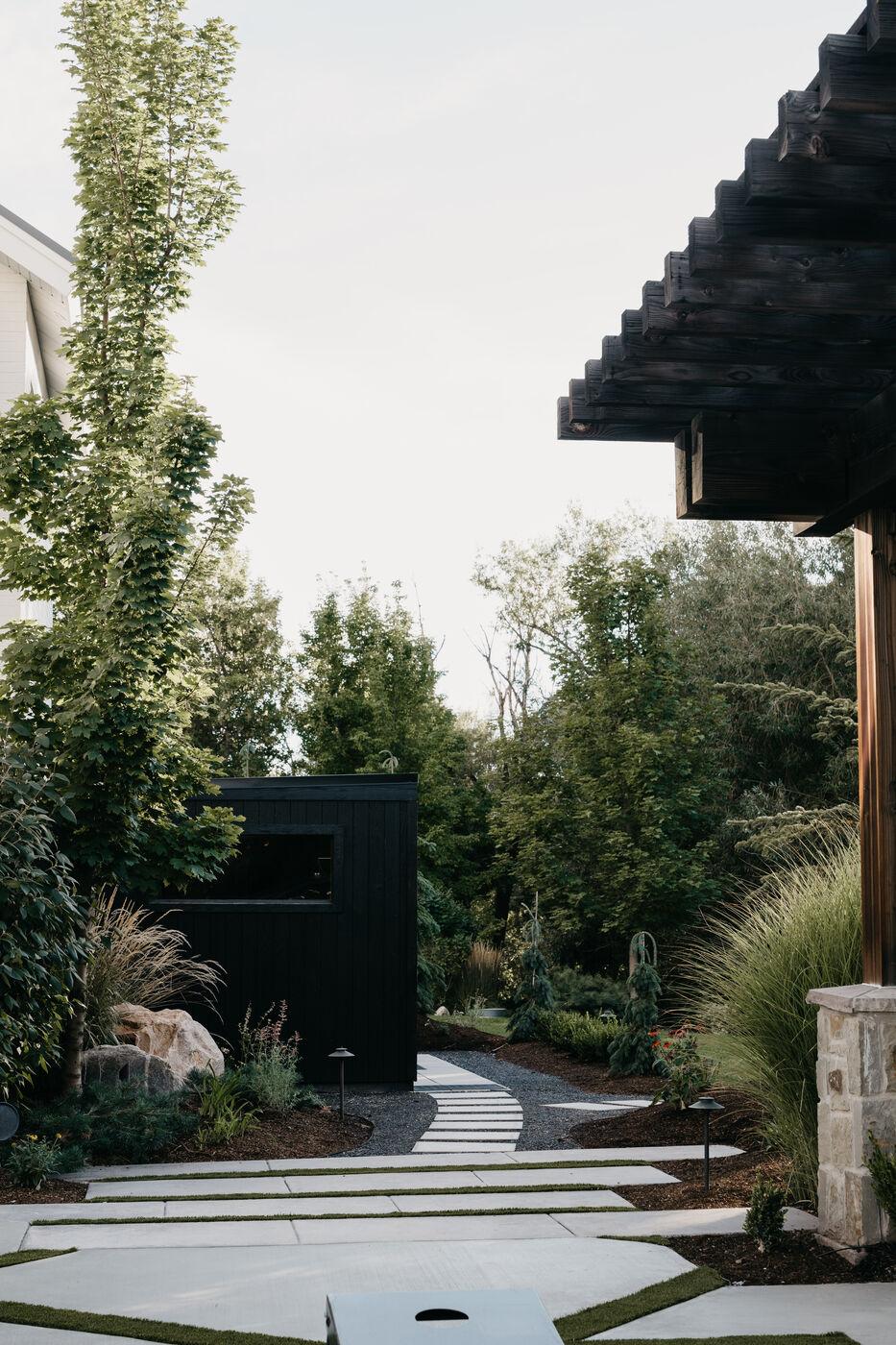
- Geotextile over clay subgrade
- A separation layer between base and subsoil. Without it, aggregate migrates down into clay and clay pumps up into the aggregate until neither is doing its job.
- Road base in compacted lifts
- Four to six inches for pedestrian surfaces, more under vehicle load, placed in lifts and compacted to a consistent density across the whole field — including the perimeter, where most patios are weakest.
- Screeded bedding course
- One inch of washed coarse sand or clean angular chip, screeded flat and left uncompacted so the stone beds evenly into it.
- Jointing chosen for the joint
- Polymeric sand where joints are tight and traffic is high; angular jointing grit where a dry-laid flagstone terrace needs to breathe and move. The wrong choice fails loudly in either direction.
- Materials that survive the winter
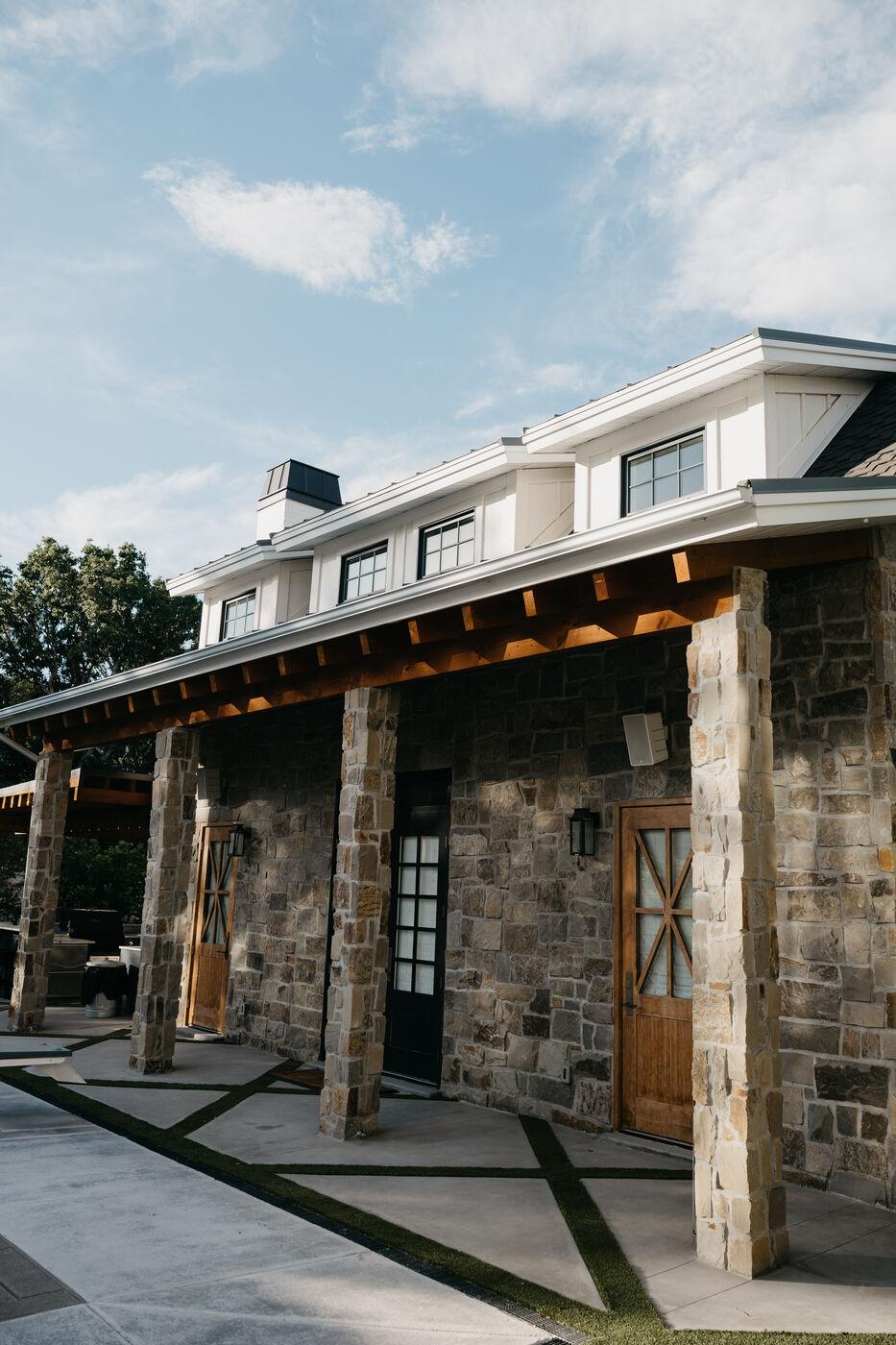
- Quarried Utah sandstone and quartzite, dense concrete pavers rated for freeze-thaw, and travertine only where snowmelt and de-icing salt will not reach it.
Patios & Hardscape
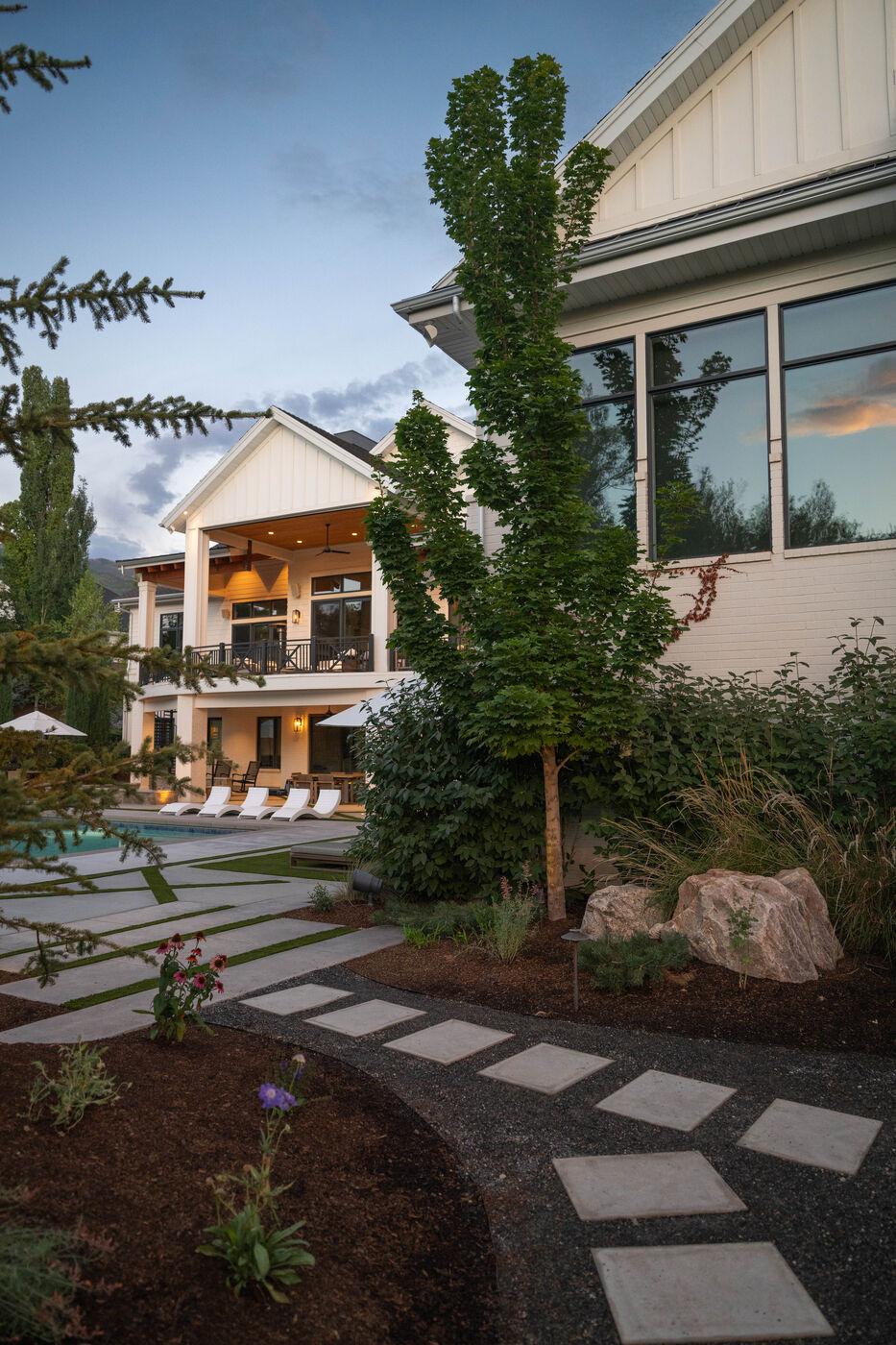
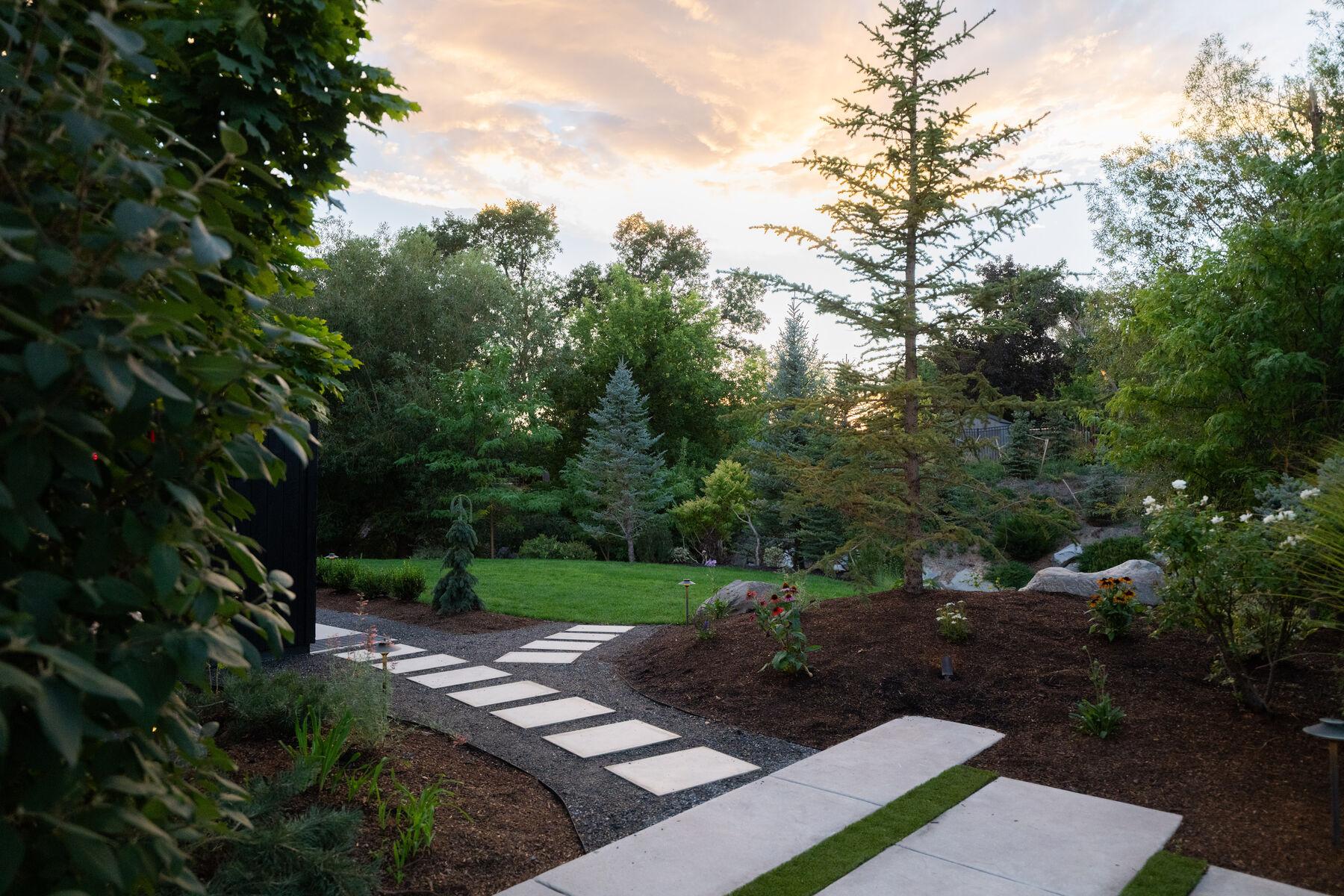
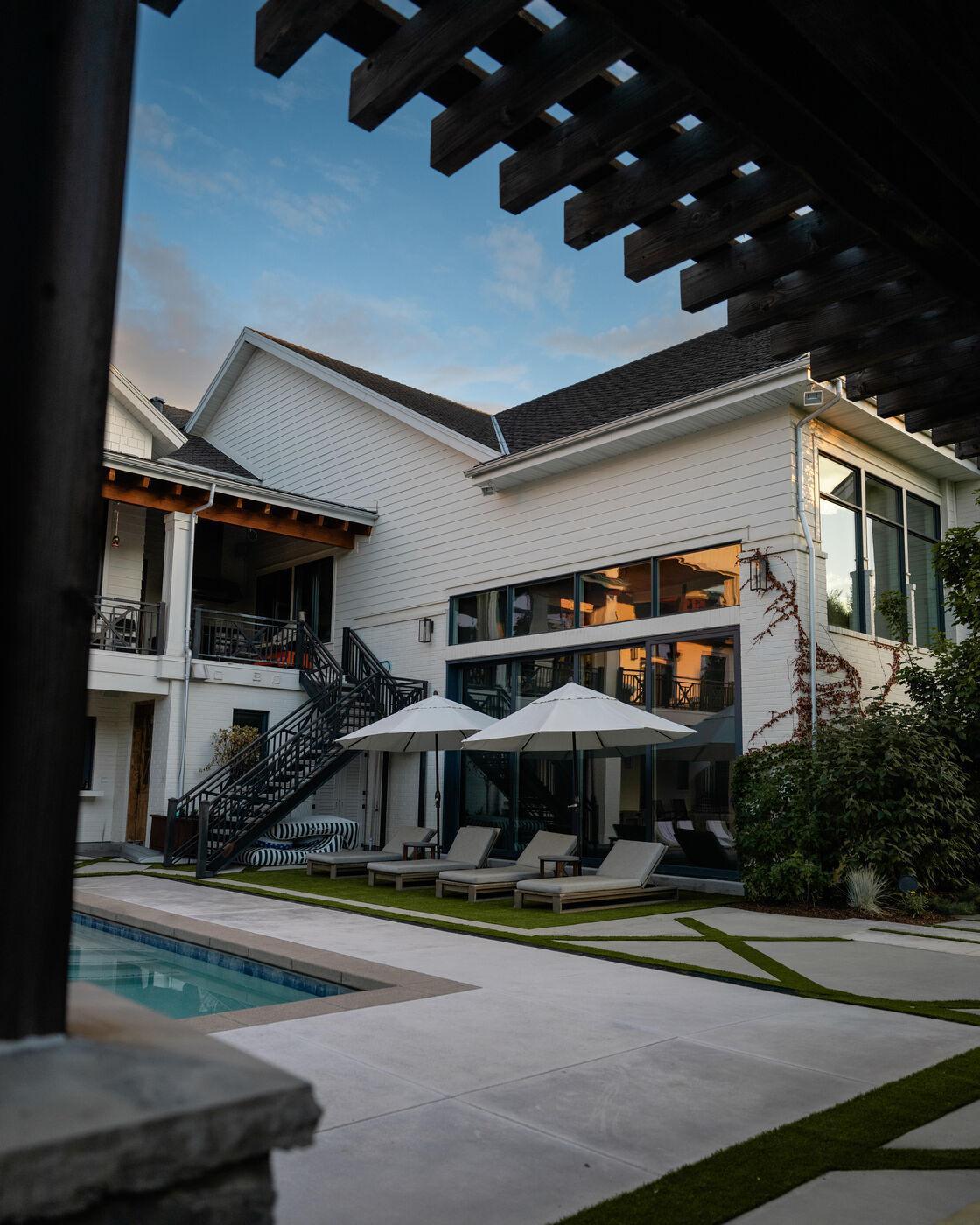
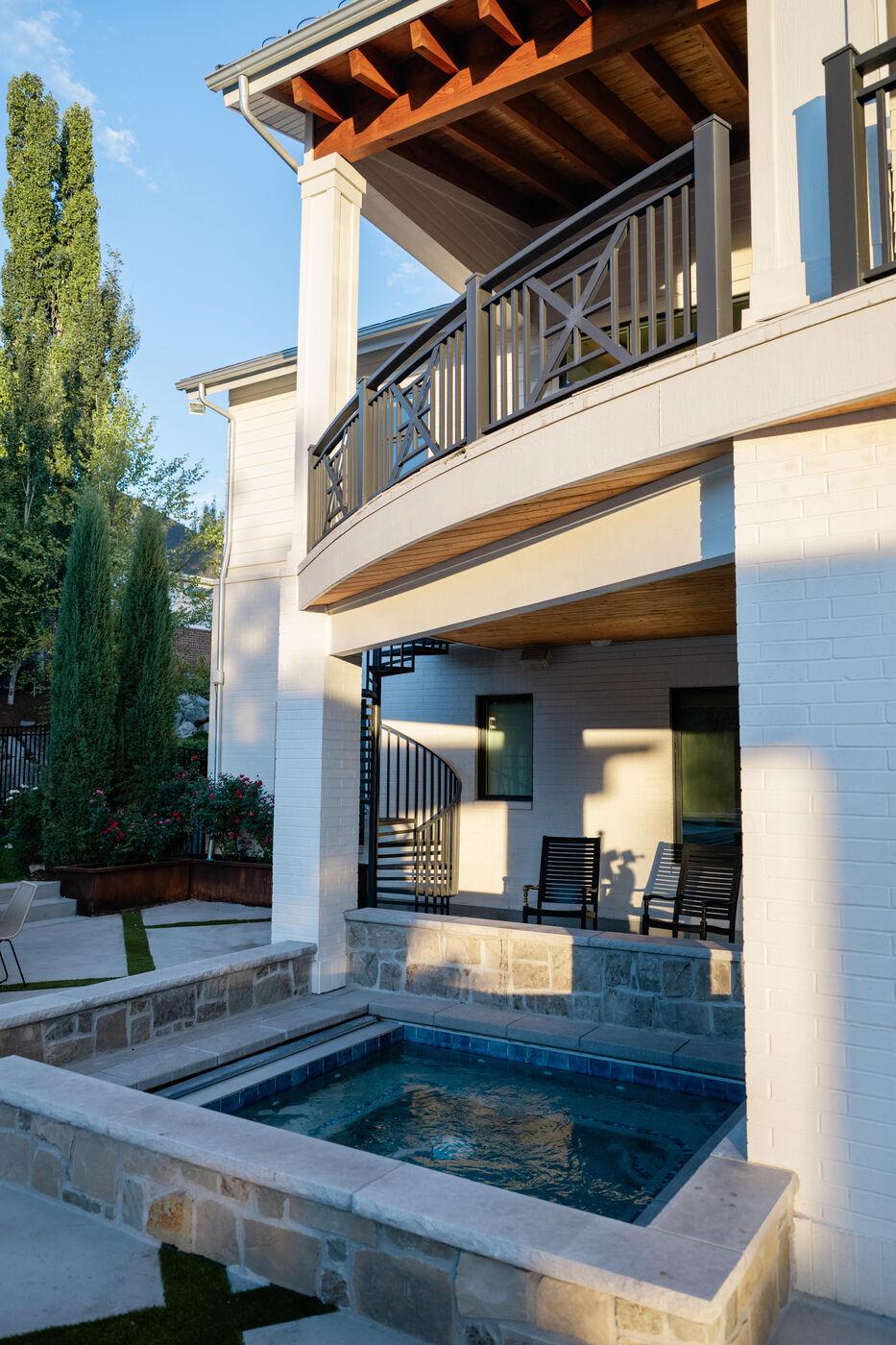
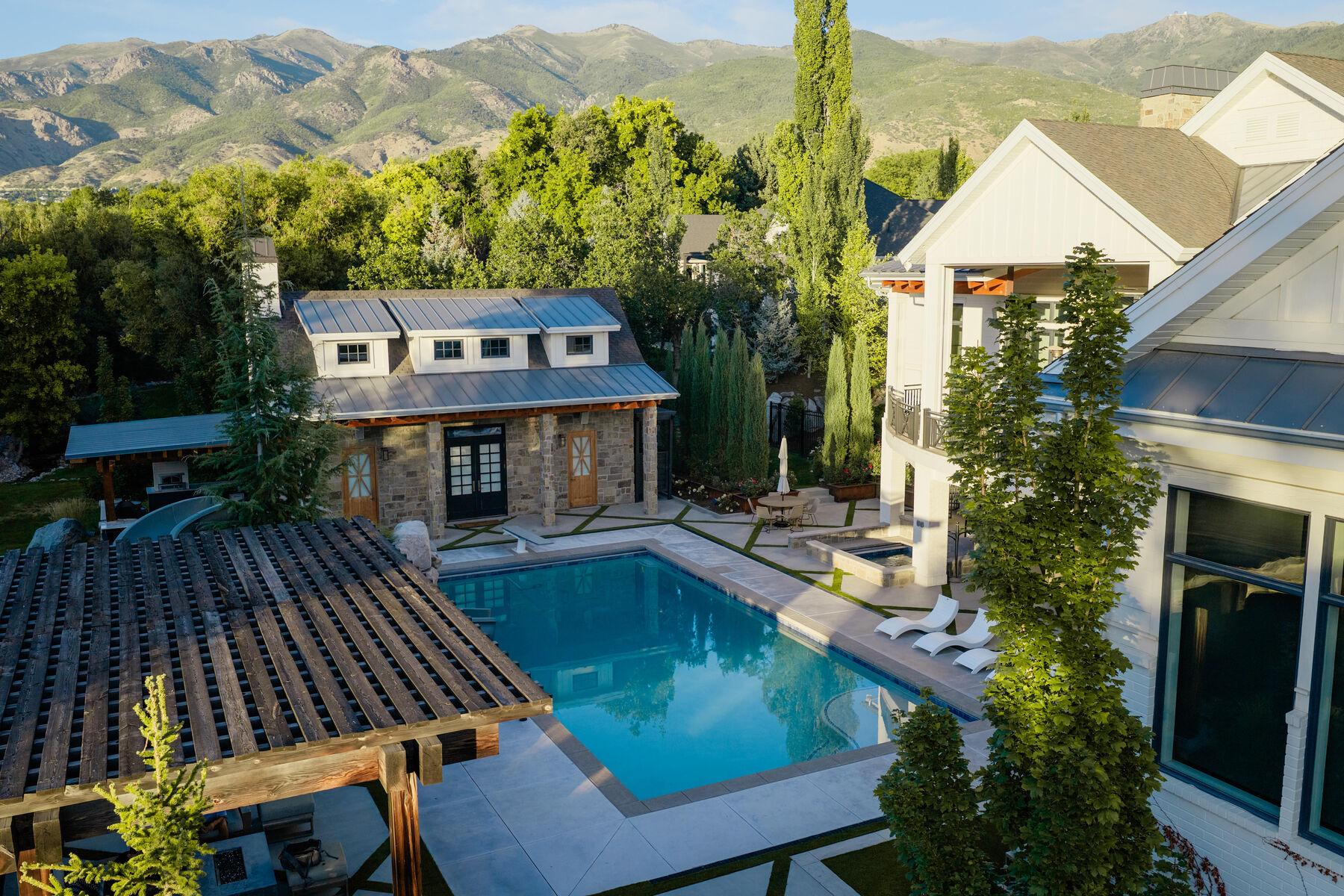
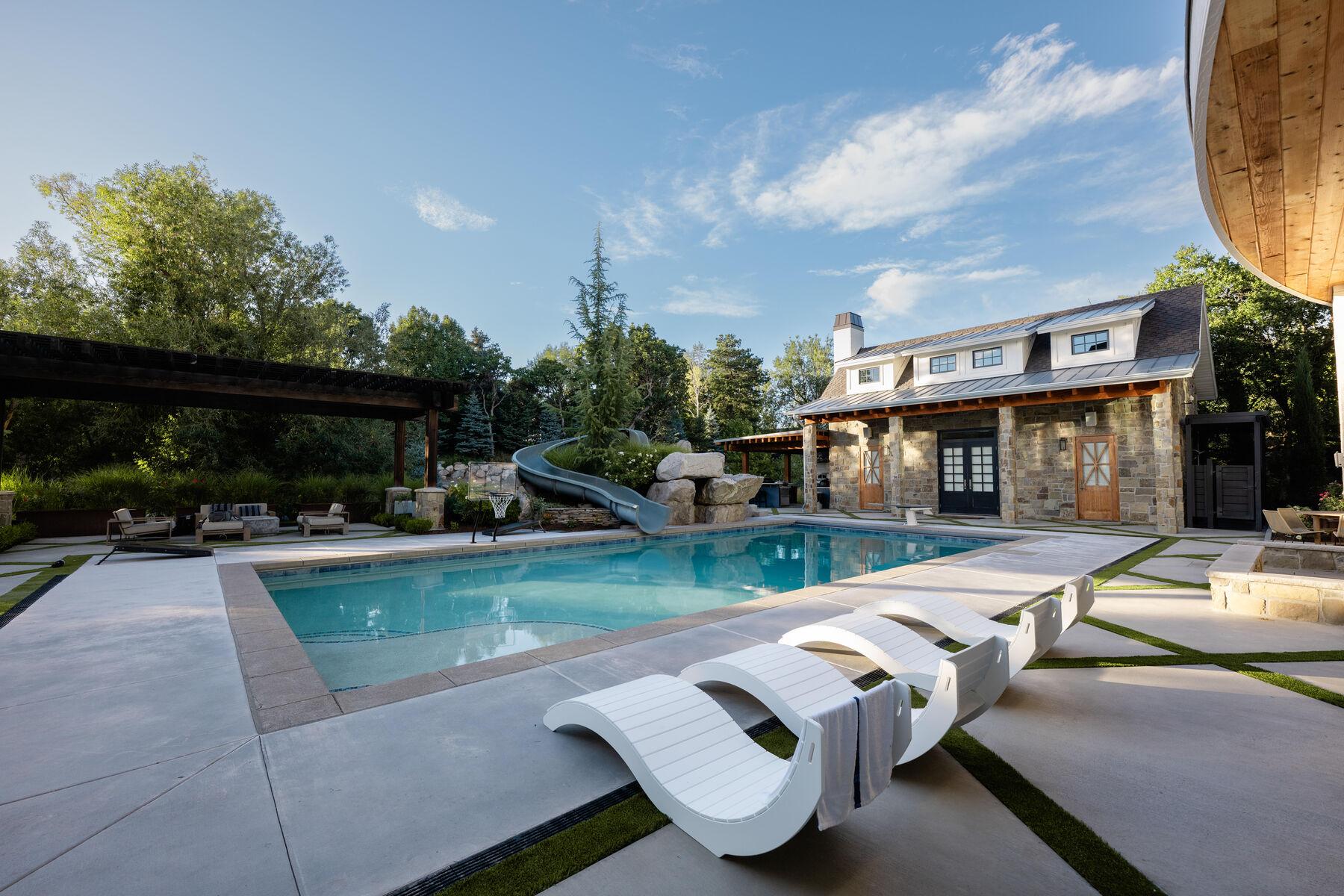
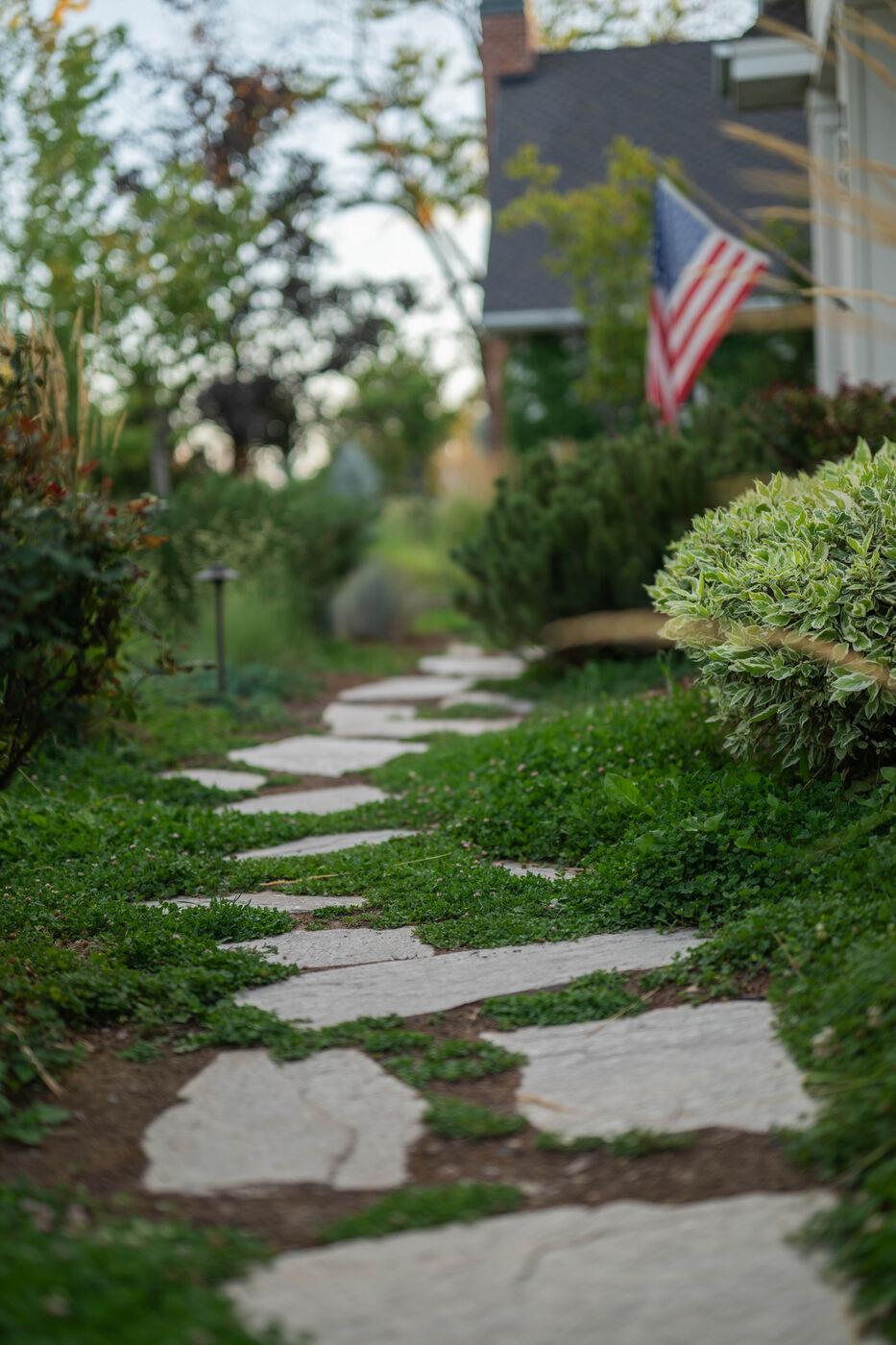
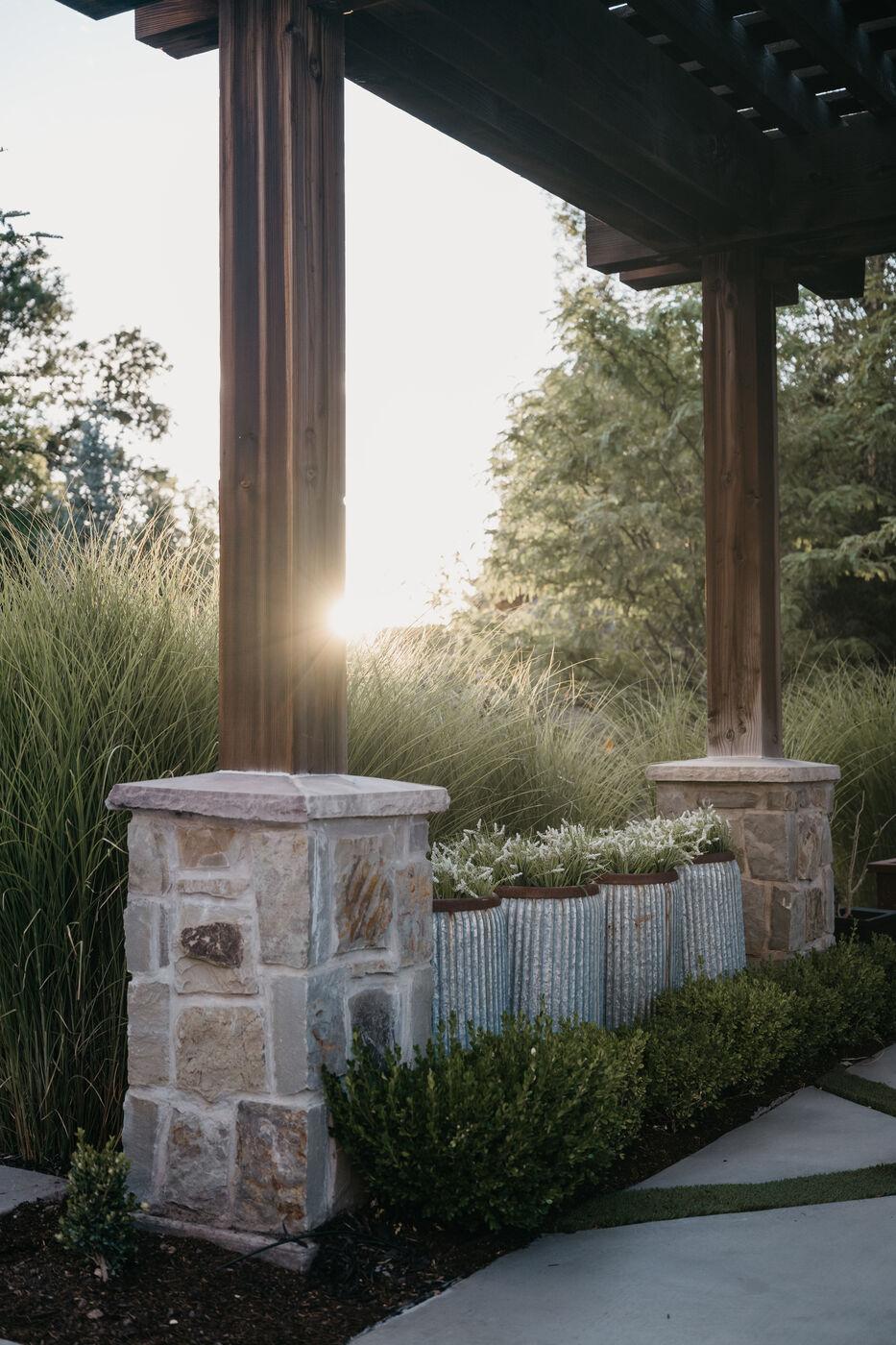
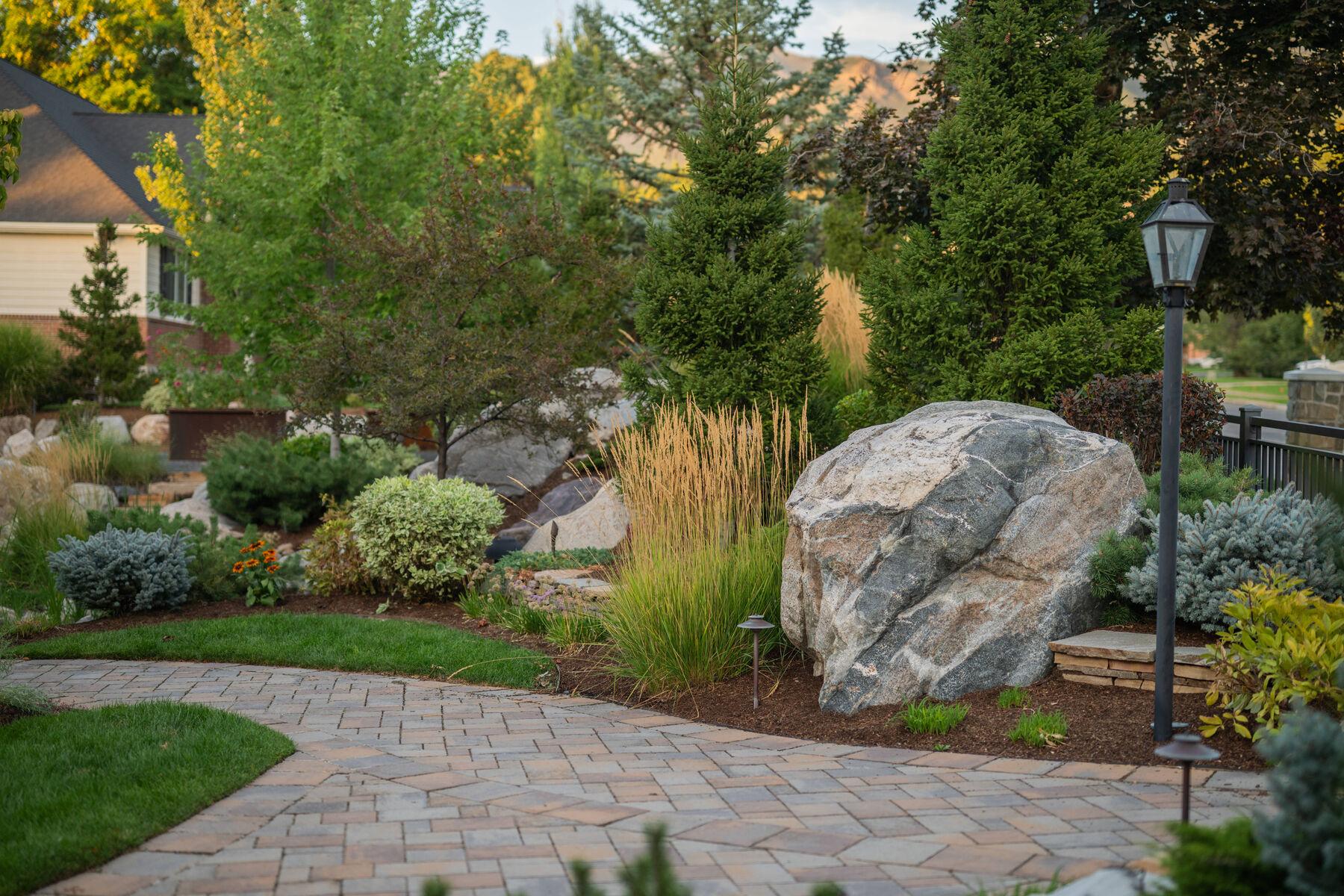
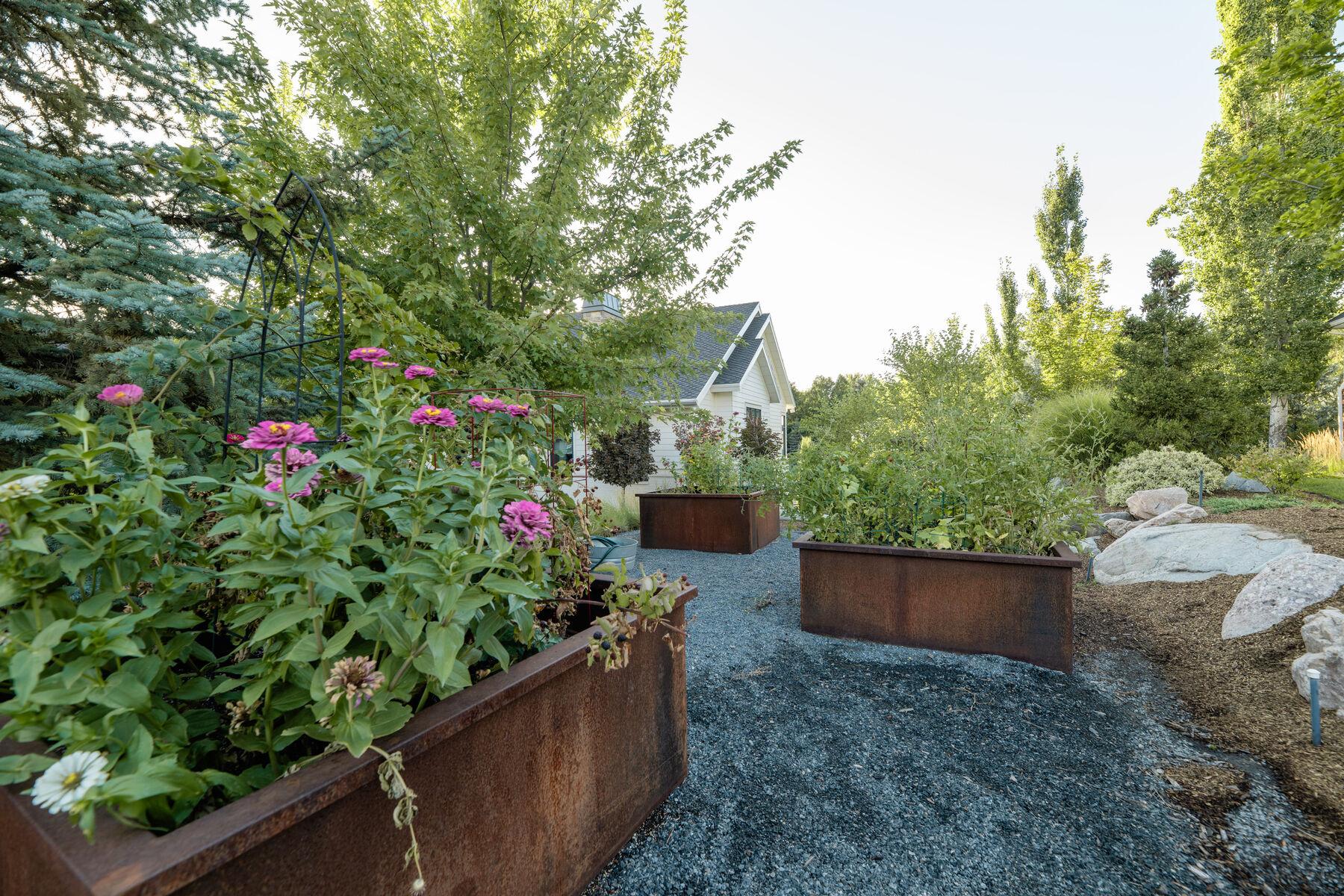
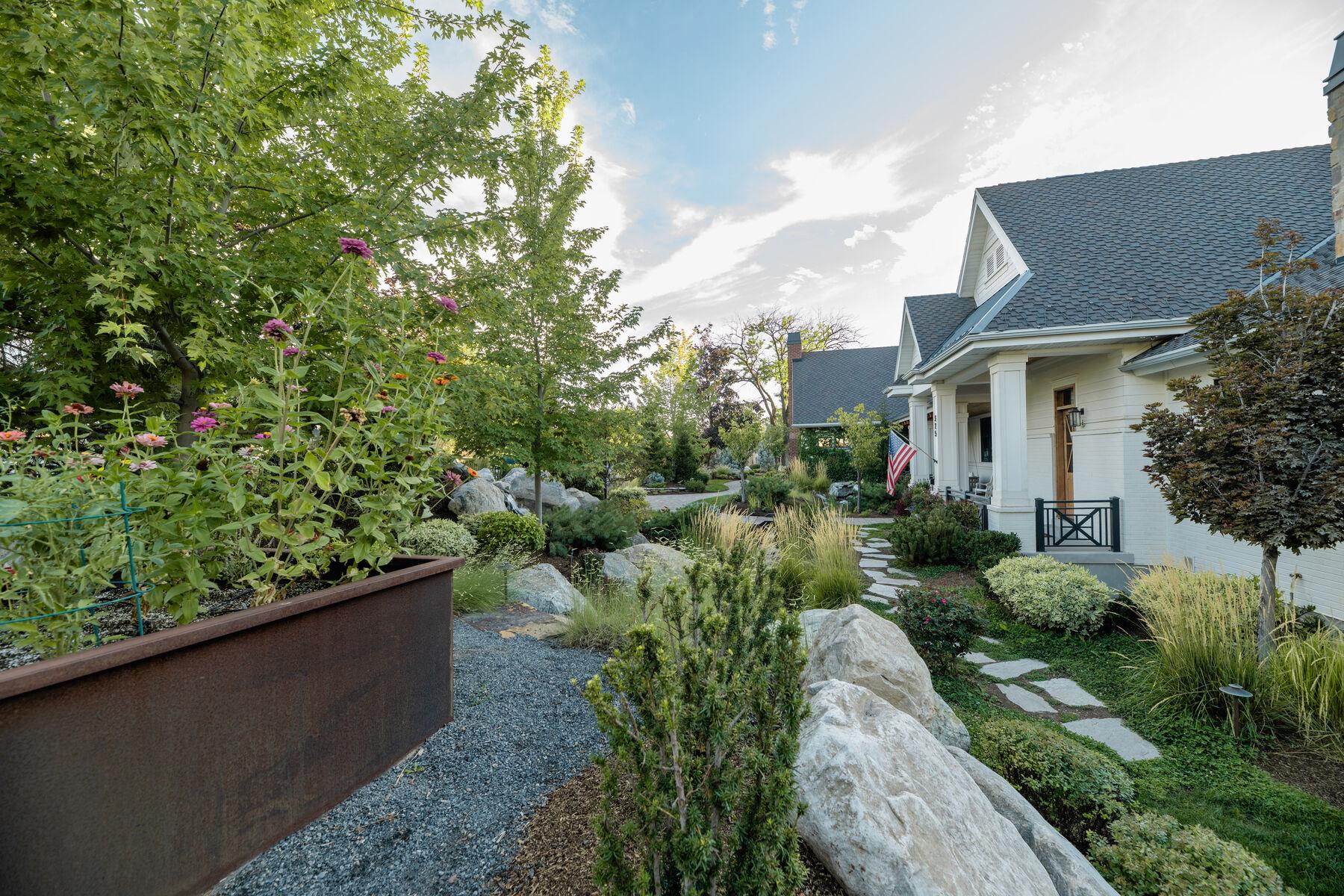
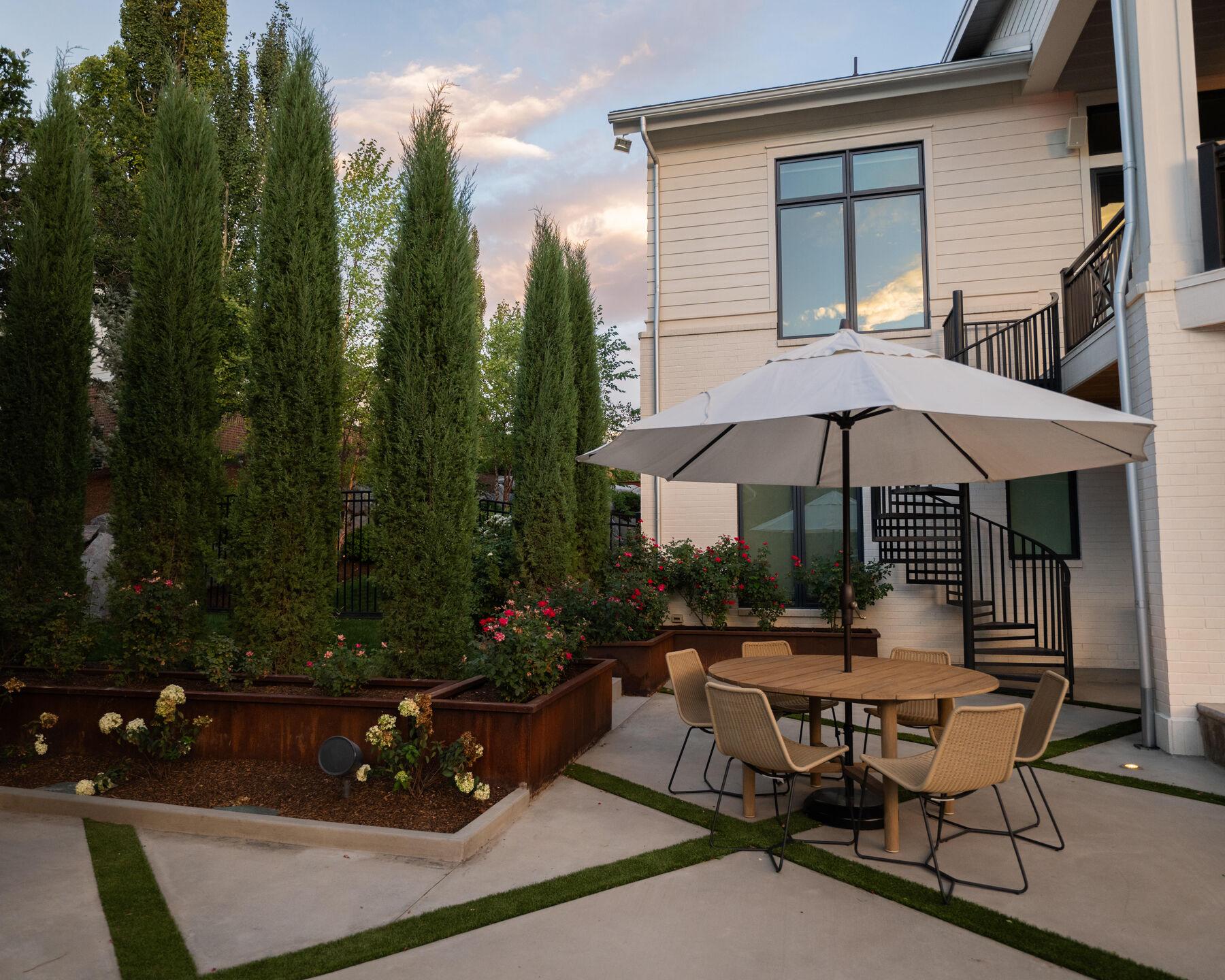
More of it, on real sites.
Common Questions
Patios & Hardscape, in practice.
- What goes under a paver or natural-stone patio?
- A compacted subgrade, a separation fabric over clay, then four to six inches of road base compacted in lifts — more under a driveway — a screeded one-inch bedding course of washed sand or clean chip, the stone, and edge restraint on every open edge. What you walk on is the finish; the base you never see is what holds it flat.
- Why do patios heave and settle in this climate?
- Northern Utah runs through dozens of freeze-thaw cycles a season. Water trapped in a poorly draining base expands about nine percent each time it freezes, lifts whatever sits on it, and leaves a void when it melts. The defence is a base that drains and does not move, compacted in lifts rather than dumped and rolled once.
- Why does edge restraint matter so much?
- The perimeter is the only place a paver field can move. Without restraint spiked into the base, the outer courses creep outward, the joints open, and the failure works its way inward across the whole surface. It is among the cheapest parts of the assembly and the one most often left out.
- What is the right jointing material between pavers?
- It depends on the joint width and the traffic. Polymeric sand suits tight joints under regular use; angular jointing grit suits a dry-laid flagstone terrace that needs to breathe and move. The wrong choice fails loudly either way — polymeric sand in a flexing joint cracks and lifts, loose grit in a tight joint washes out.
- Should the patio slope away from the house?
- Always — a minimum of about one percent, roughly an eighth of an inch per foot, away from the structure. When a patio is set level to a door threshold instead of to a designed fall, it becomes the reason the basement is wet. That fall should be checked with instruments, not assumed by eye.
Tell us about the ground.
A few questions about the site, the scope, and the budget you have in mind — then a conversation with the person who would actually run the job.
The Other Five
- Grading & DrainageWhere every yard is won or lost. Water moves first; everything else follows.
- Retaining WallsEngineered walls with drainage behind them, built to hold a hillside for decades.
- Pools & SurroundsThe deck, coping, and drainage around water — the part of a pool you actually stand on.
- Planting & GardensPlant palettes chosen for this climate — alpine wind, alkaline soil, short shoulder seasons.
- Landscape LightingLow-voltage lighting laid out for the evenings you actually use the yard.
- Water FeaturesBasins, spillways, and quiet water — plumbed and sealed to run without babysitting.