Discipline 07 — Northern Utah
Water Features
Moving water is the one element that changes a garden with your eyes closed. It is also the one most likely to become a maintenance problem, and the difference is entirely in how it was plumbed.
The Craft
What the work actually is.
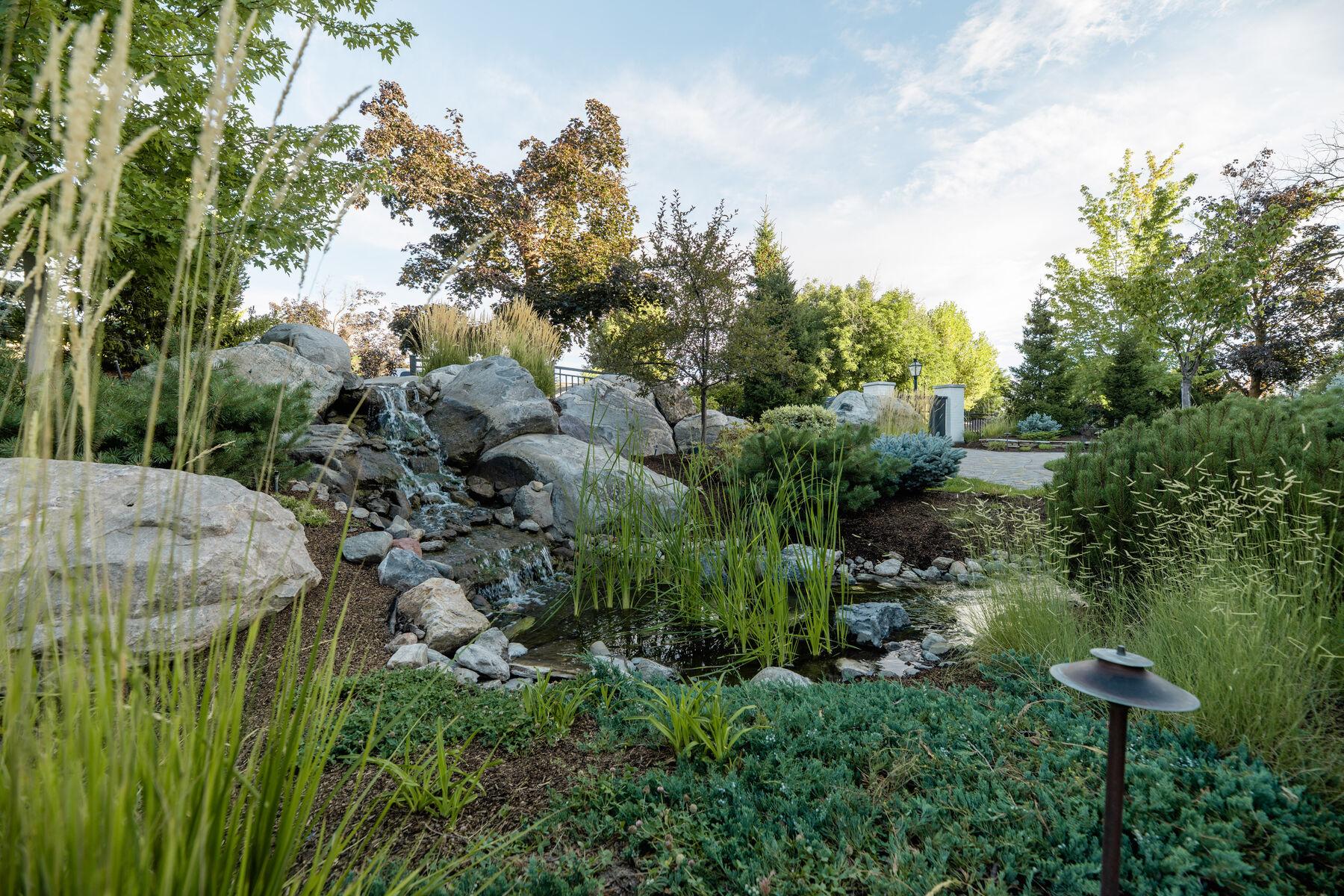
Most water features fail on one of two numbers. The first is head height — the vertical distance the pump has to lift water, plus friction loss through every foot of pipe and every fitting. A pump rated for the flow you want at zero lift delivers a fraction of it at four feet through thirty feet of pipe, which is how a spillway designed as a sheet becomes a dribble.
The second is basin volume. When the pump shuts off, everything in the falls, the pipe, and the upper reservoir drains back down. If the basin cannot hold it, the feature overflows every time the power cuts. Sizing for that, plus evaporation and splash-out, is what stops an autofill valve from quietly running all summer.
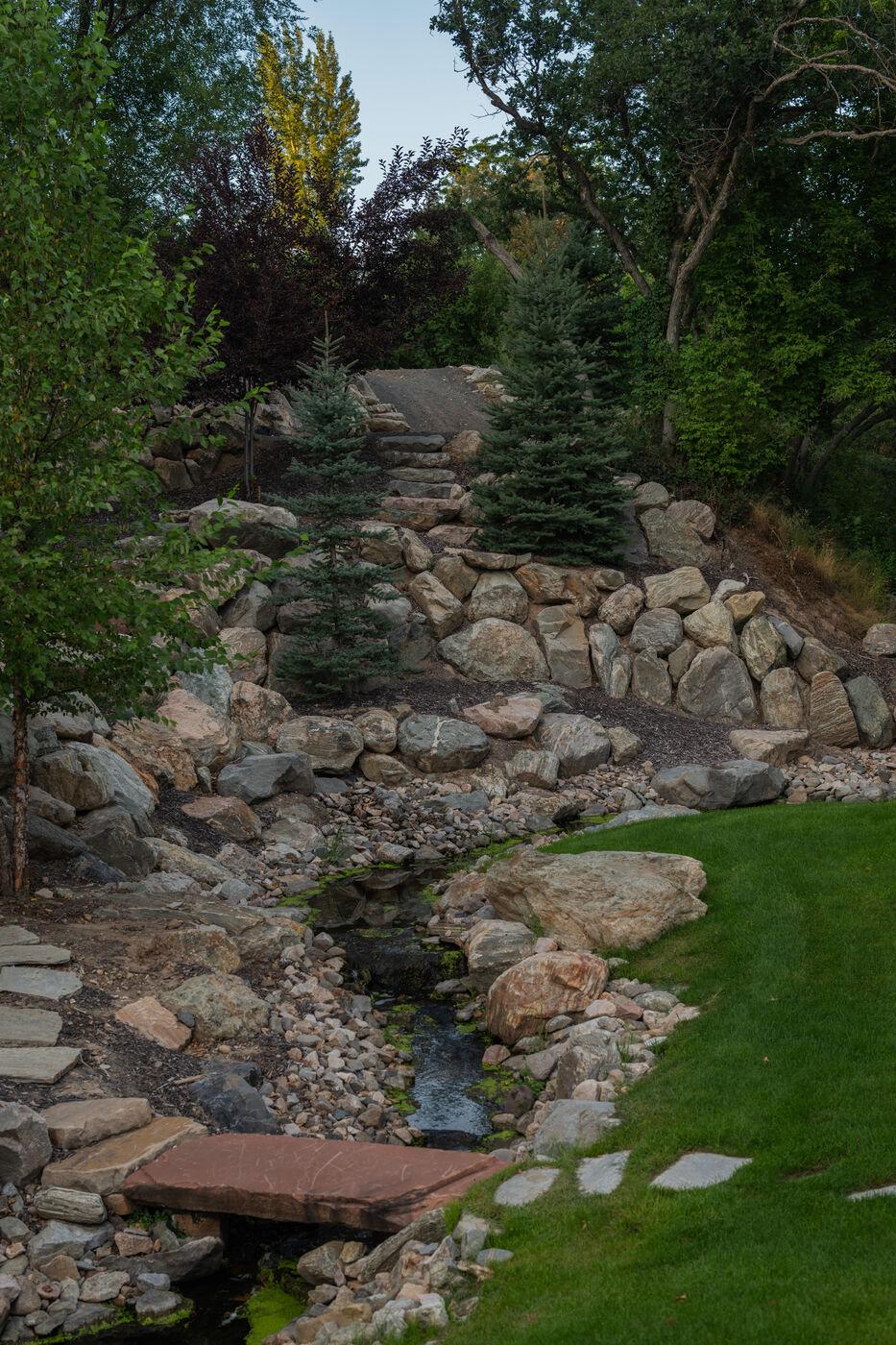
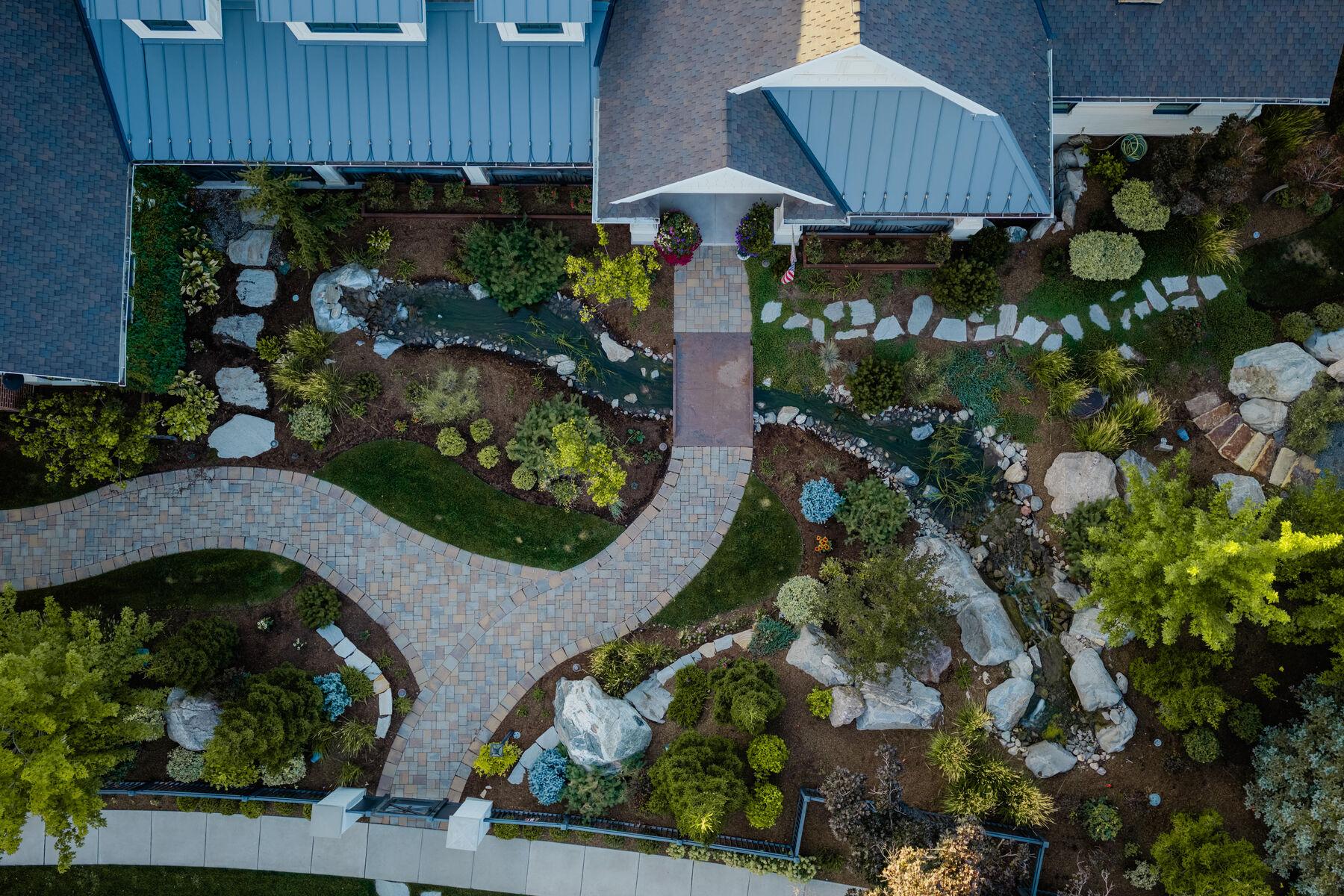
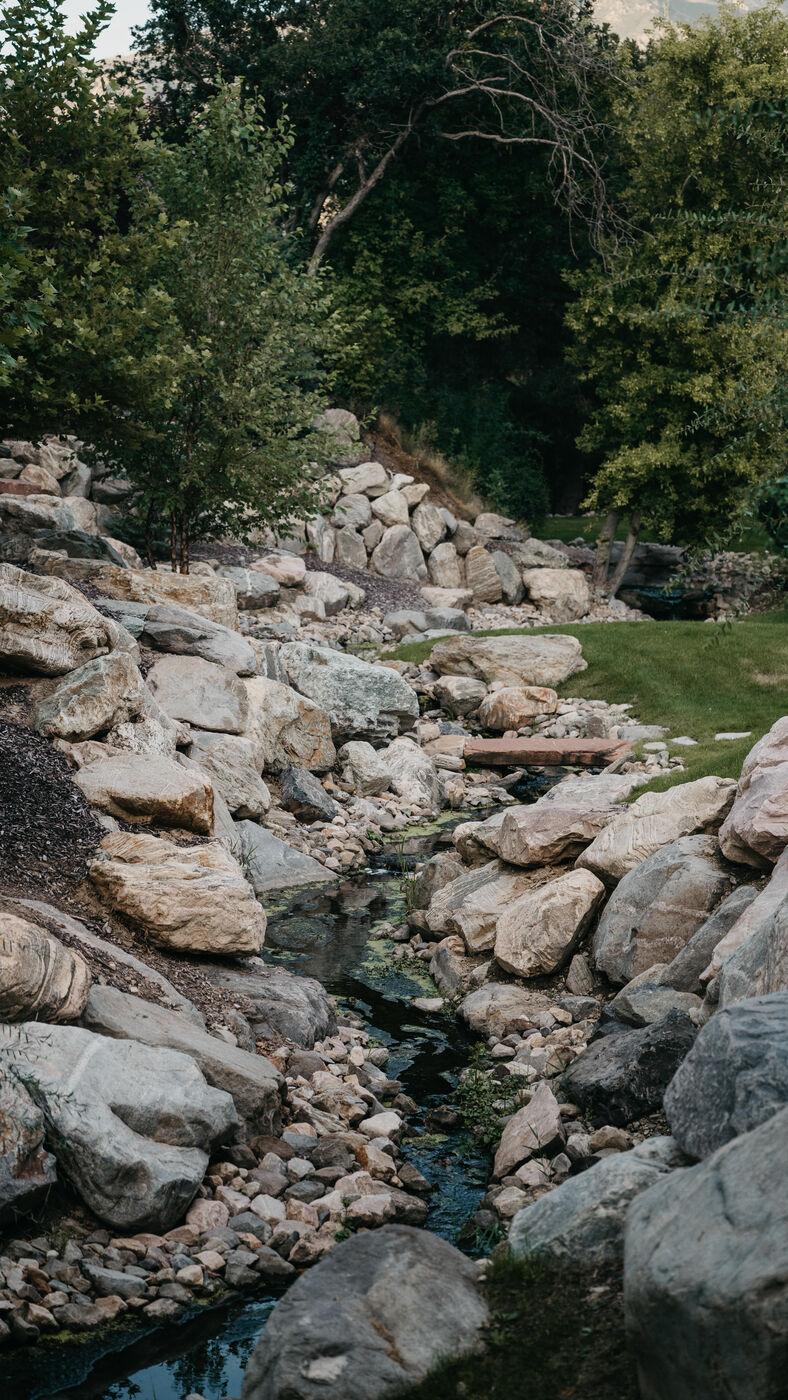
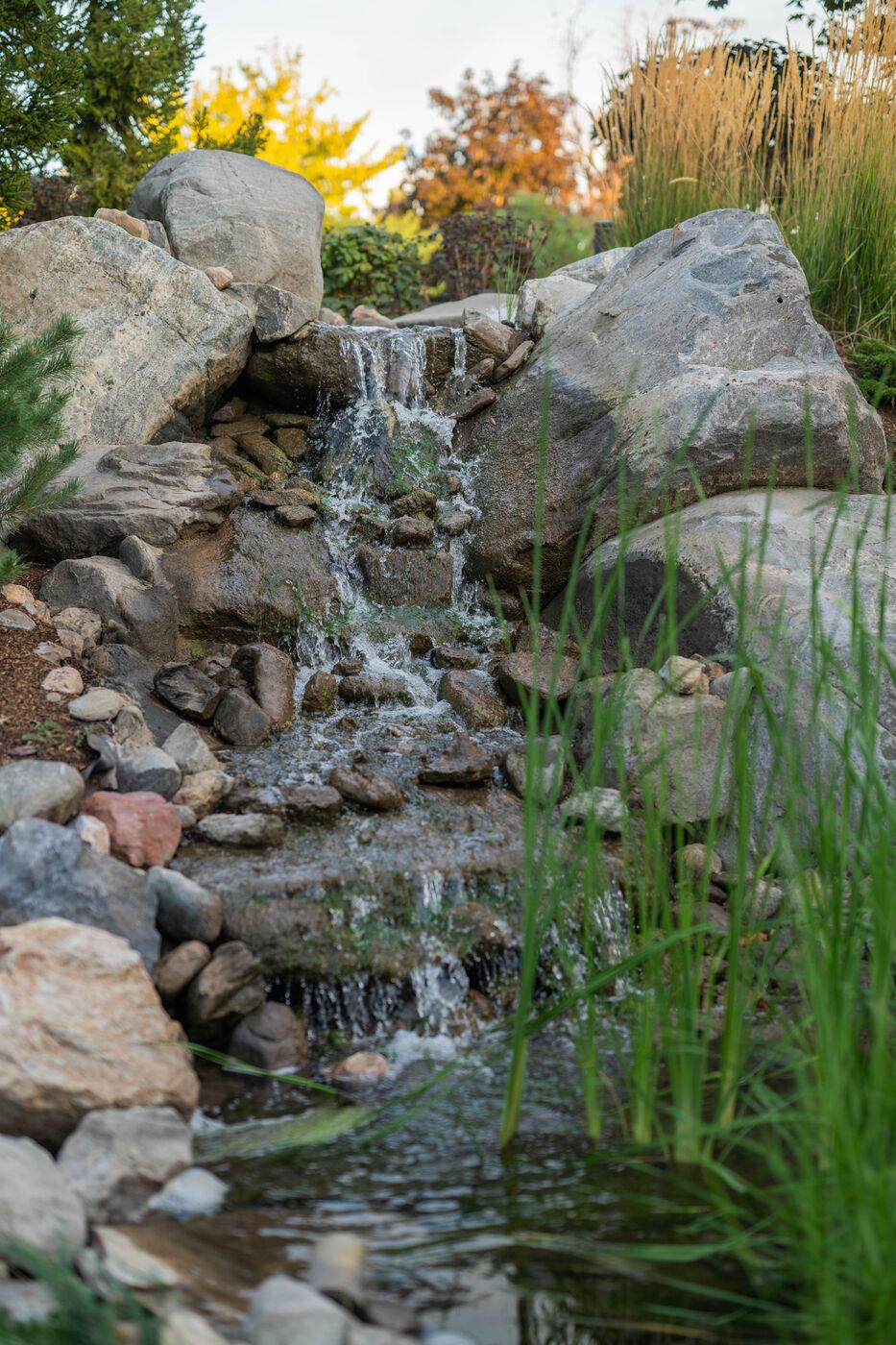
Then there is the edge. The single detail that separates a built water feature from a natural-looking one is that you never see where the liner ends. Liner terminated behind stone, pleated rather than folded, mechanically held above the waterline and buried — that is the detail, and it is the one most often skipped.
What Goes Wrong
The failures we are hired to undo.
None of these are unlucky. Each one is a decision made earlier by someone working faster than the ground allowed.
- 01
Pump sized without head loss
Flow ratings are quoted at zero lift. Real installations lift water and push it through pipe and fittings. The pump has to be selected against the actual curve, not the headline number.
- 02
Basin too small for drain-back
Every power cut becomes an overflow. The basin has to hold the full volume of everything above it plus working reserve.
- 03
Liner folded, not pleated
Folds trap debris, create channels for water to track behind the liner, and telegraph through gravel. Pleats laid flat and dressed behind stone disappear.
- 04
No way to drain it
A feature that cannot be winterised in an afternoon will not be winterised. Water left in a pump or a line through a northern Utah January cracks both.
- 05
Full sun and no circulation
Still water in direct sun grows algae regardless of what is added to it. Circulation, shade, and biological filtration solve it; chemistry only argues with it.
Materials & Method
How we build it instead.
- 45-mil EPDM over underlayment
- Fish-safe EPDM on a geotextile underlayment, protected from puncture below and dressed out of sight above the waterline.
- Pump selected against the curve
- Sized on total dynamic head — lift plus friction through the actual pipe run and fittings — with flexible PVC rather than corrugated tubing to reduce loss.
- Accessible valves and a drain point
- Every line reachable, every line drainable. Valve boxes placed where they can be opened without moving stone.
- Dedicated GFCI circuit
- Its own protected circuit, so a tripped breaker somewhere else in the yard does not silently shut the feature down for a week.
- Edge detailing last
- Stone set into the water line, not on top of it, so the transition from dry to wet reads as ground rather than as an assembly.
Common Questions
Water Features, in practice.
- Why does a spillway end up trickling instead of sheeting?
- Because the pump was sized on its headline flow rating, which is quoted at zero lift. A real feature lifts water several feet and pushes it through pipe and fittings, and a pump loses much of its rated flow doing so. The pump has to be selected against total dynamic head — the actual lift plus friction — not the number on the box.
- How big does the basin need to be?
- Large enough to hold everything that drains back down when the pump shuts off — the water in the falls, the pipe, and the upper reservoir — plus a reserve for evaporation and splash-out. Undersize it and every power cut becomes an overflow, and an autofill valve ends up running quietly all summer to keep up.
- Can a water feature run through a Utah winter?
- Only if it was plumbed to be drained. Water left in a pump or a line through a hard freeze cracks both. We give every line a reachable valve and a drain point so winterising is a twenty-minute task rather than a reason to shut the feature down in October and never restart it.
- How do you keep the edge from looking artificial?
- By never letting the liner show. The single detail that separates a built feature from a natural-looking one is that the liner is terminated behind stone, pleated rather than folded, and held mechanically above the waterline and buried. Folds trap debris and telegraph through gravel; a dressed pleated edge disappears.
- Why does the water go green in summer?
- Still water in direct sun grows algae regardless of what is poured into it. Circulation, some shade, and biological filtration solve it; chemistry only argues with it. A feature planned for its exposure — enough movement and the right filtration for the volume — stays clear without a constant chemical regime.
Tell us about the ground.
A few questions about the site, the scope, and the budget you have in mind — then a conversation with the person who would actually run the job.
The Other Five
- Grading & DrainageWhere every yard is won or lost. Water moves first; everything else follows.
- Retaining WallsEngineered walls with drainage behind them, built to hold a hillside for decades.
- Patios & HardscapeStone set on a compacted base, jointed to survive freeze and thaw.
- Pools & SurroundsThe deck, coping, and drainage around water — the part of a pool you actually stand on.
- Planting & GardensPlant palettes chosen for this climate — alpine wind, alkaline soil, short shoulder seasons.
- Landscape LightingLow-voltage lighting laid out for the evenings you actually use the yard.