Discipline 06 — Northern Utah
Landscape Lighting
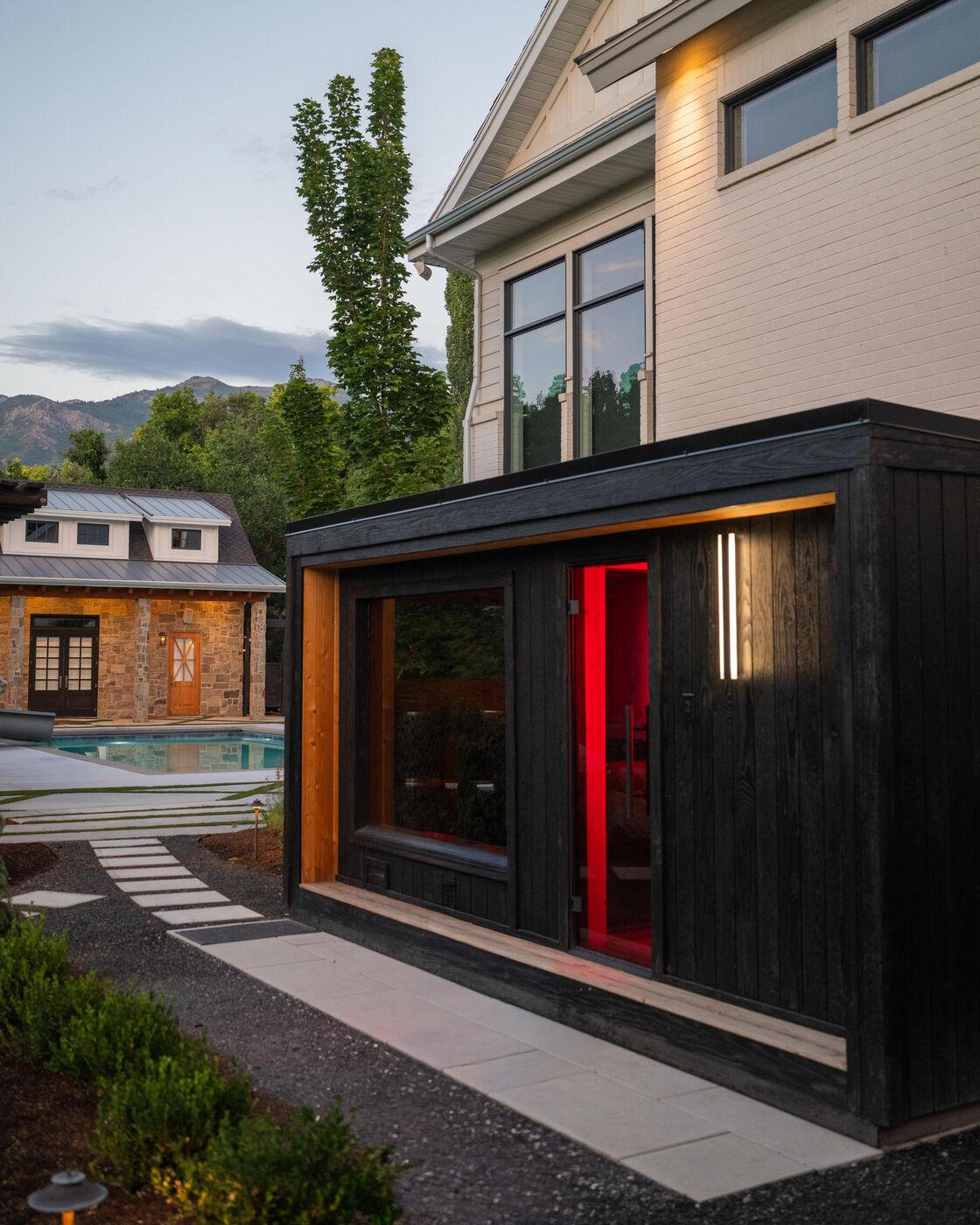
Lighting is the discipline that decides how many months of the year the landscape exists. Done well, it is invisible — you see the wall, the canopy, the water, and never the fixture.
The Craft
What the work actually is.
Low-voltage lighting is an electrical problem before it is a design problem. Twelve volts loses pressure over distance, and a long daisy-chained run puts a bright fixture at the transformer and a dim, yellowing one at the end. Wiring in hubs, sizing cable to the load, and calculating the drop across each run is what keeps sixteen fixtures looking like one system instead of sixteen decisions.
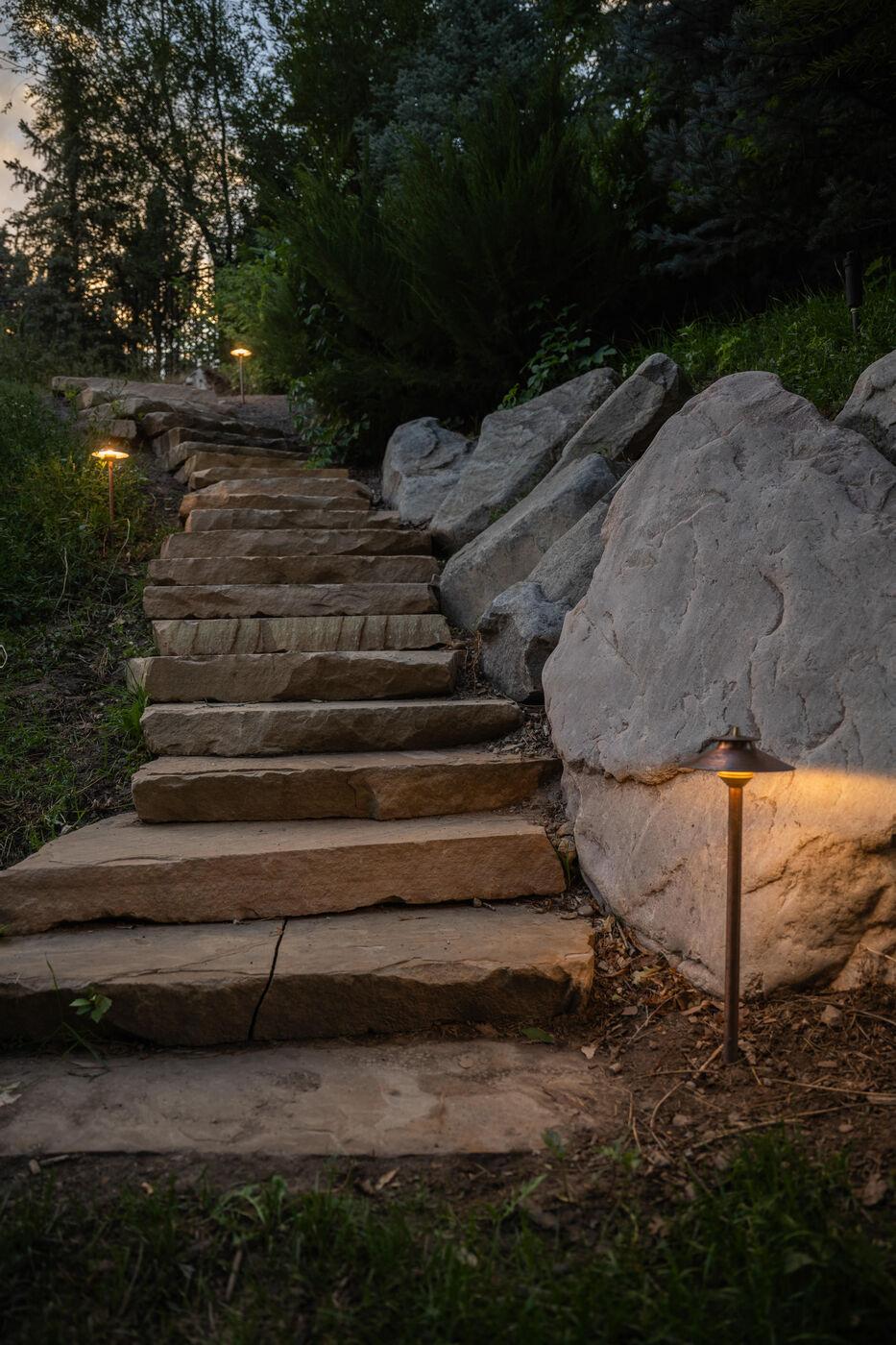
The design problem is restraint. Most residential lighting is a coverage exercise — light everything, evenly, from knee height. What actually reads at night is contrast: a wall grazed from close in so its texture comes forward, a canopy lit from within so the ground below it is dappled rather than flooded, a stair tread lit from the side. Path lights are the last tool reached for, not the first.
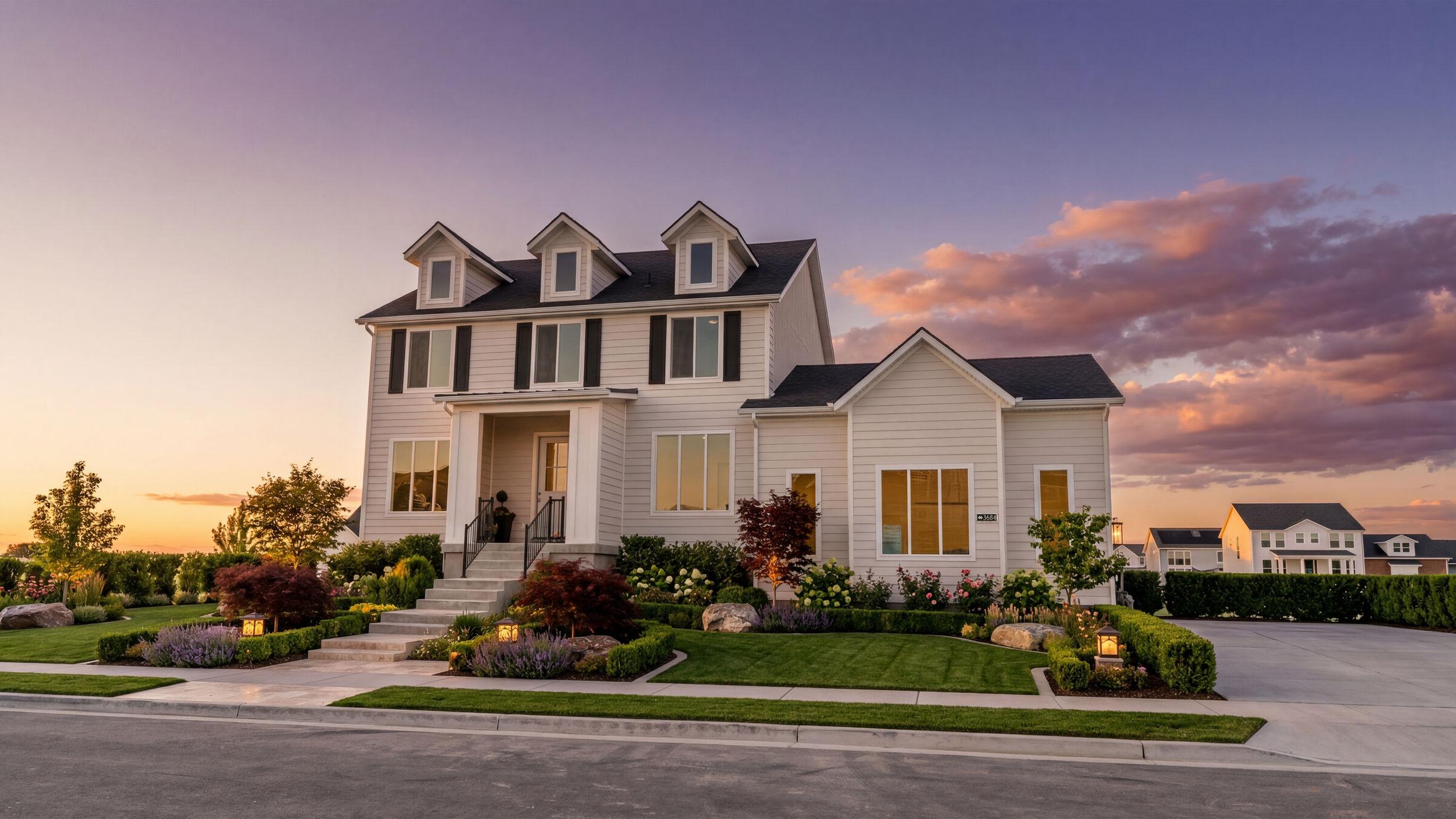
Color temperature carries more of the result than anything else. One warm temperature — 2700K — across the whole property makes planting read green and stone read warm. Mixed temperatures, or the cold 4000K and 5000K light sold as brighter, drain color out of a garden and make a house look like a car park.
What Goes Wrong
The failures we are hired to undo.
None of these are unlucky. Each one is a decision made earlier by someone working faster than the ground allowed.
- 01
Voltage drop ignored
Fixtures at the end of a long run receive less voltage, dim visibly, and shift warmer than the rest. Multi-tap transformers and hub wiring exist to solve this, and cost almost nothing at installation.
- 02
Unshielded optics
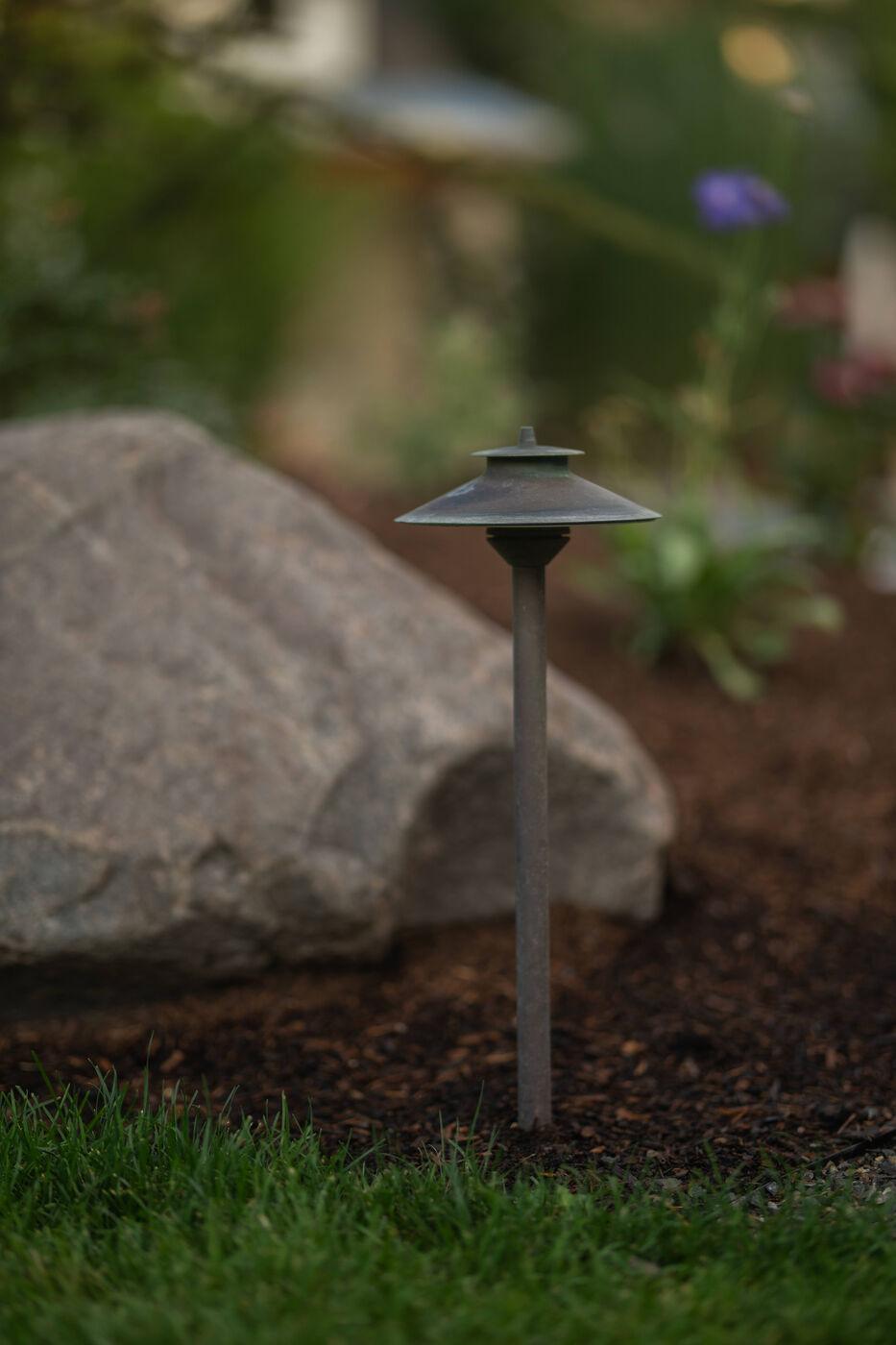
If you can see the source from a seat on the patio, the fixture is failing. Glare shields, deeper cowls, and honeycomb louvres put the light on the object and keep it out of the eye.
- 03
Painted aluminum fixtures
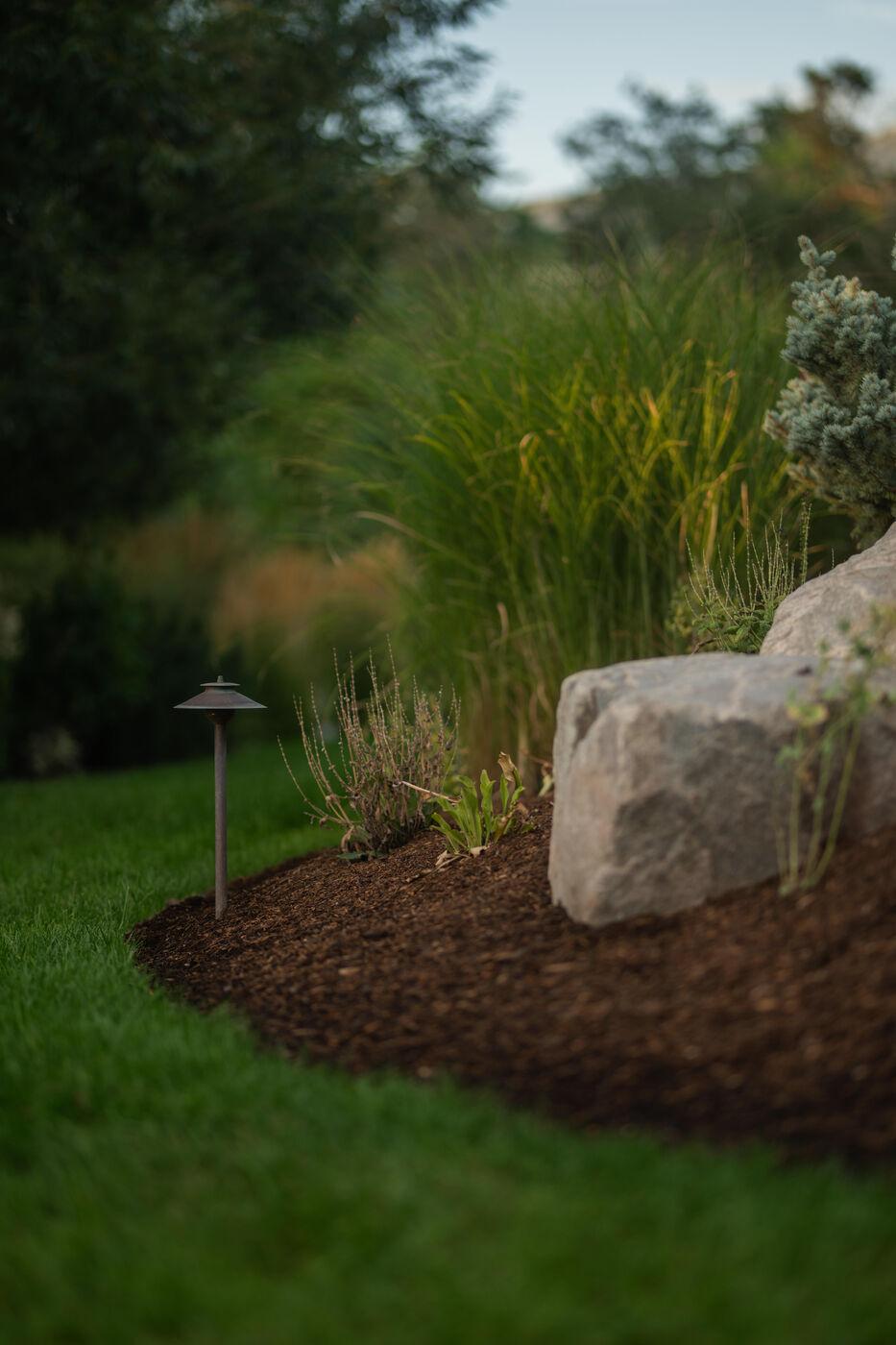
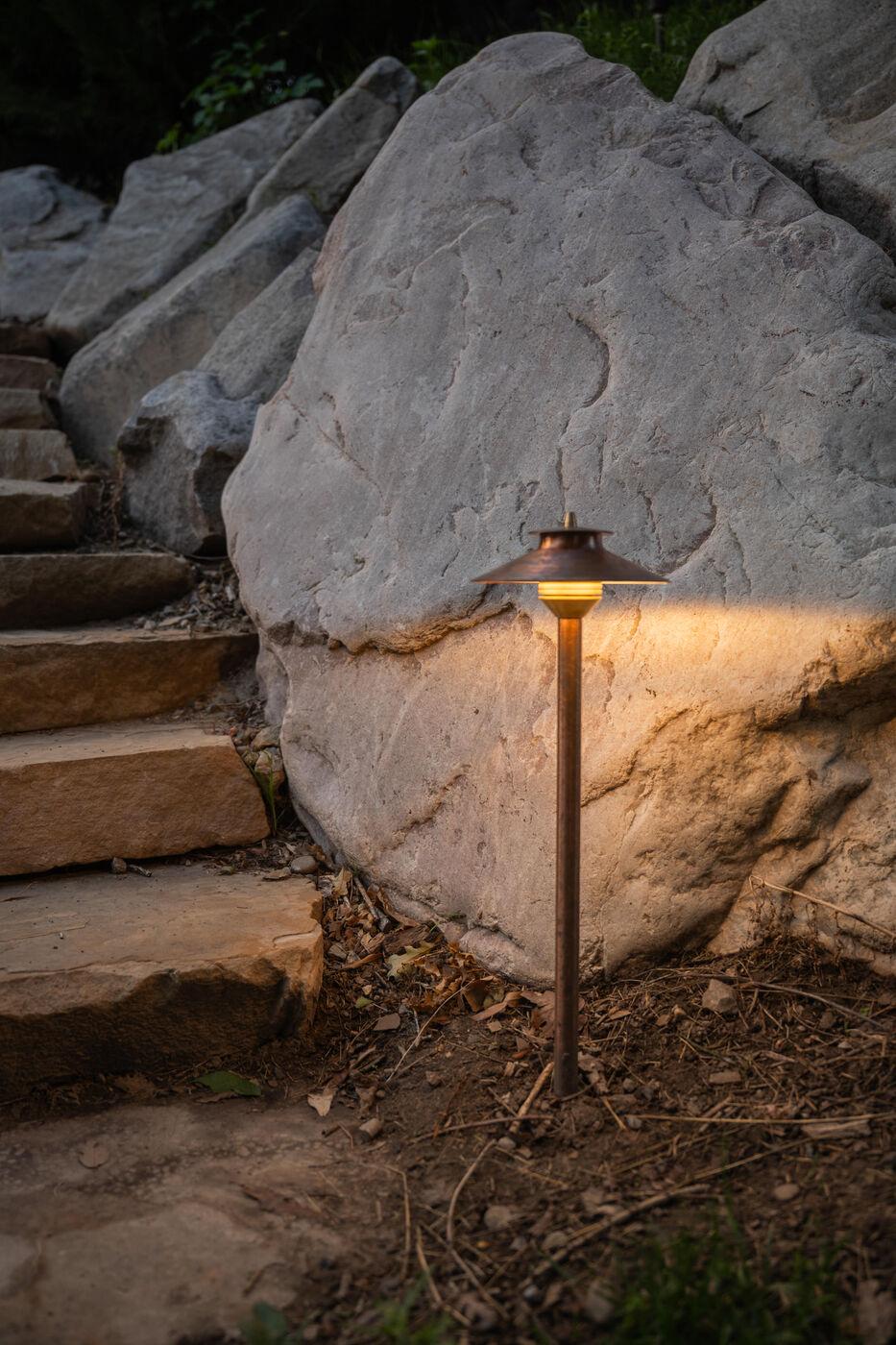
Aluminum corrodes at the soil line, where it is wet and buried. Solid brass and copper weather to a patina and keep working. This is the difference between a system that lasts twenty years and one replaced in five.
- 04
Wire nuts in the ground
Twist-on connectors buried in soil corrode and fail, usually one fixture at a time over several years. Silicone-gel-filled direct-burial connectors are the only correct answer.
- 05
Fixtures swallowed by mulch
Three seasons of mulch top-dressing buries a well light and blocks a path light. Placement has to account for the ground rising, and the system needs a maintenance pass each spring.
Materials & Method
How we build it instead.
- Transformer with headroom
- Sized to the connected load with capacity in reserve, so the system can be added to without being rebuilt. Multi-tap outputs let long runs be compensated at the source.
- Direct-burial cable, sleeved under hardscape
- Twelve-gauge direct-burial cable trenched six to eight inches deep, routed outside tree root zones, with conduit sleeves placed under patios and walks before the base goes in.
- Brass and copper only
- Solid brass and copper fixtures with integrated LED or serviceable lamps, chosen so that a failure in year eight is a repair rather than a replacement.
- One color temperature
- 2700K throughout, with beam spreads selected per application — narrow for uplighting a trunk, wide for grazing a wall face.
- Astronomic control
- A timer that tracks sunset through the year rather than a fixed clock, so the system follows the season instead of being reset four times a year.
Landscape Lighting
More of it, on real sites.
Common Questions
Landscape Lighting, in practice.
- Why do the fixtures at the end of a run go dim and yellow?
- Voltage drop. Twelve-volt current loses pressure over distance, so a long daisy-chained run leaves a bright fixture at the transformer and a dim, warm-shifted one at the far end. Sizing the cable to the load, wiring in hubs rather than one long chain, and calculating the drop across each run keep the whole system reading as one.
- What color temperature should landscape lighting be?
- One warm temperature across the whole property — 2700K is our standard. It makes planting read green and stone read warm. The cooler 4000K and 5000K light often sold as brighter drains the color out of a garden and makes a house look like a car park; mixing temperatures does the same in patches.
- Why brass and copper fixtures instead of cheaper aluminum?
- Aluminum corrodes at the soil line, where fixtures sit wet and half-buried, and painted finishes fail there first. Solid brass and copper weather to a patina and keep working. It is the difference between a system that lasts twenty years and one replaced in five, and the cost gap at installation is small.
- Do lighting cables need to be run before the hardscape?
- The sleeves do. Conduit for low-voltage cable is placed under patios, walks, and driveways while the base is still open, so fixtures on the far side of hardscape can be fed without cutting through finished stone later. Retrofitting a sleeve with a saw after the fact is slow, visible, and avoidable.
- How should low-voltage connections be made underground?
- With silicone-gel-filled, direct-burial-rated connectors — never twist-on wire nuts. Wire nuts buried in soil corrode and fail one fixture at a time over several years, and the fault is tedious to trace. Gel-filled connectors seal the joint against moisture, which is the single most common point of failure in a buried system.
Tell us about the ground.
A few questions about the site, the scope, and the budget you have in mind — then a conversation with the person who would actually run the job.
The Other Five
- Grading & DrainageWhere every yard is won or lost. Water moves first; everything else follows.
- Retaining WallsEngineered walls with drainage behind them, built to hold a hillside for decades.
- Patios & HardscapeStone set on a compacted base, jointed to survive freeze and thaw.
- Pools & SurroundsThe deck, coping, and drainage around water — the part of a pool you actually stand on.
- Planting & GardensPlant palettes chosen for this climate — alpine wind, alkaline soil, short shoulder seasons.
- Water FeaturesBasins, spillways, and quiet water — plumbed and sealed to run without babysitting.