Discipline 04 — Northern Utah
Pools & Surrounds
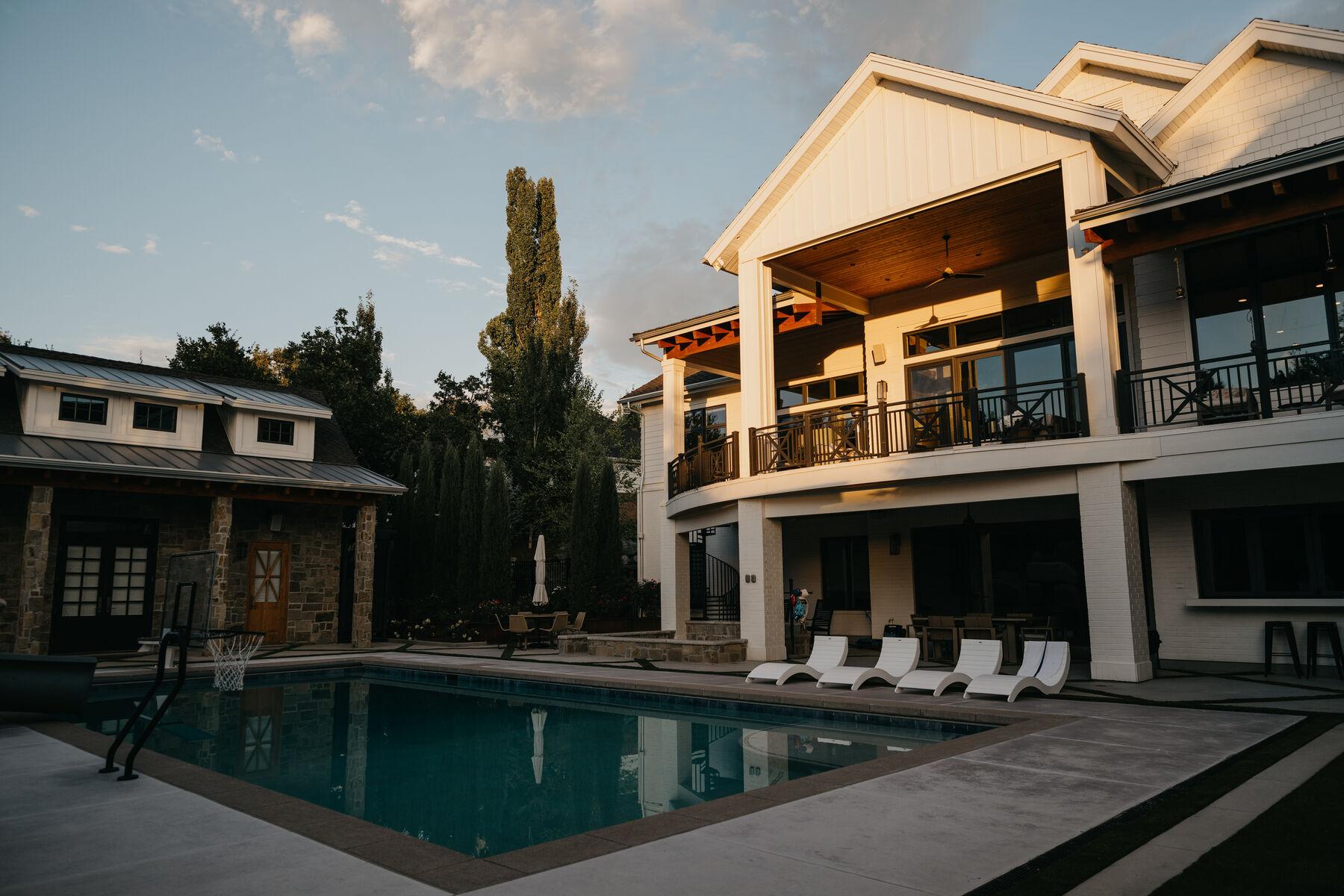
A pool is two trades pretending to be one. The shell is a licensed pool contractor's work; everything you walk on, look at, and drain is ours, and the join between the two is where most of the problems live.
The Craft
What the work actually is.
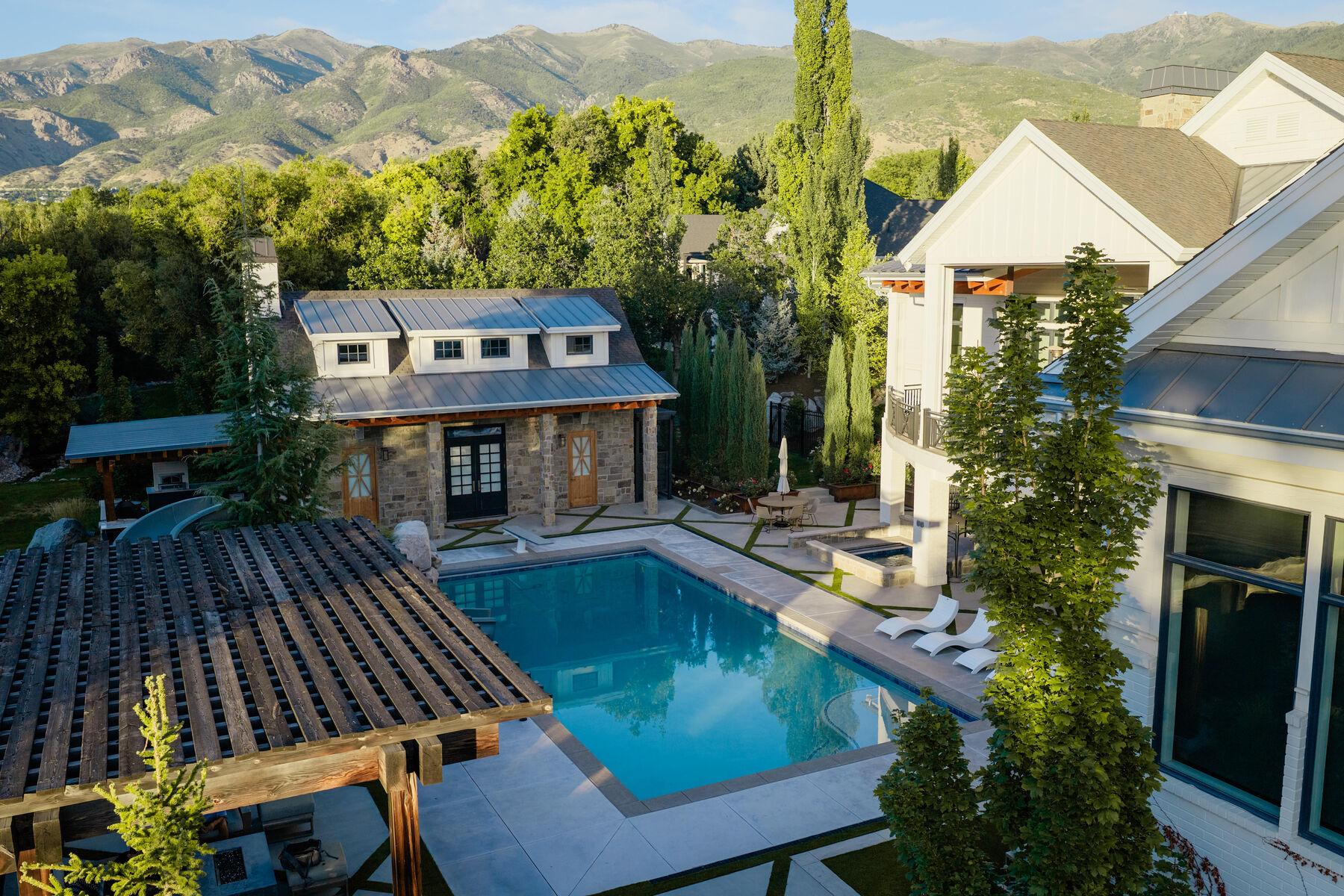
The first decision is which way the deck falls. Water has to leave the deck away from the pool, or every storm and every hosing-down carries dirt, fertiliser, and deck grit straight into the water and onto the filter. That sounds obvious and is routinely got wrong, because falling away from the pool means the deck has to fall toward something else — a drain line, a channel, a planted margin built to take it. Deciding where that water goes is the whole design.
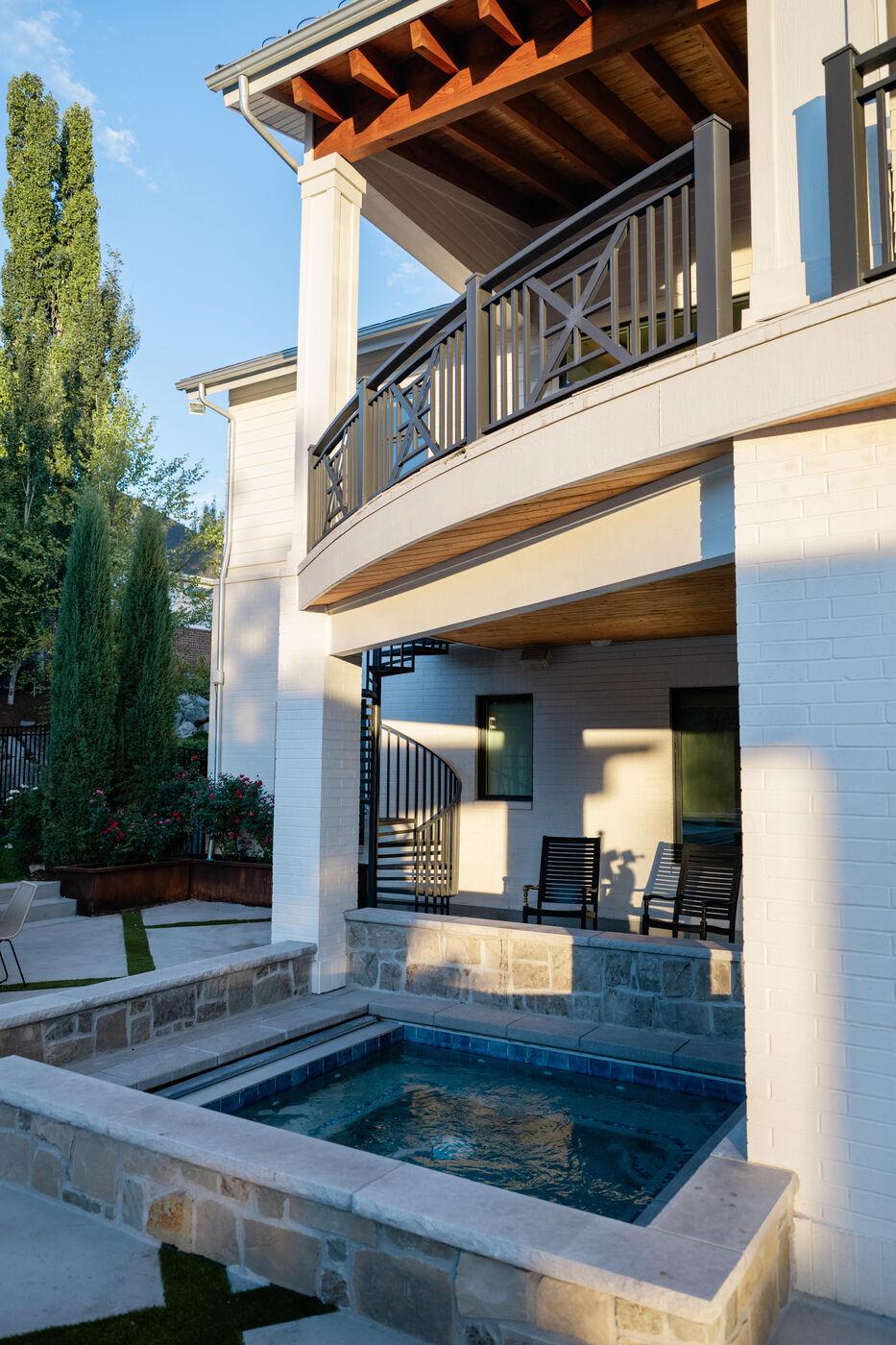
The second is the joint where deck meets shell. A pool shell and a concrete deck are two structures with different masses moving on different schedules, and in a climate that freezes they move a great deal. They must be separated by a real expansion joint — a compressible filler full-depth through the slab, sealed at the surface — not a tooled line or a saw cut that only scores the top inch. Coping that lifts, cracks that run out from the corners of the shell, and separated tile almost always trace back to that one detail.
The third is everything buried. Conduit for deck and feature lighting, irrigation sleeves, autofill supply, and the bonding grid all cross under the deck, and every one of them is cheap while the base is open and expensive the day after the pour. On a pool project the sequencing pressure is unusual, because the pool contractor and the deck are on the same critical path — which is exactly when things get left out.
What Goes Wrong
The failures we are hired to undo.
None of these are unlucky. Each one is a decision made earlier by someone working faster than the ground allowed.
- 01
Deck falling toward the water
Every rain and every wash-down loads the pool with grit and whatever was on the deck. The falls have to run away from the coping to a drain, a channel, or a planted margin sized to take them.
- 02
No true expansion joint at the coping
A saw cut is a control joint, not an expansion joint. Without a compressible full-depth separation, deck and shell fight each other through freeze and thaw, and the coping loses.
- 03
Turf run to the coping
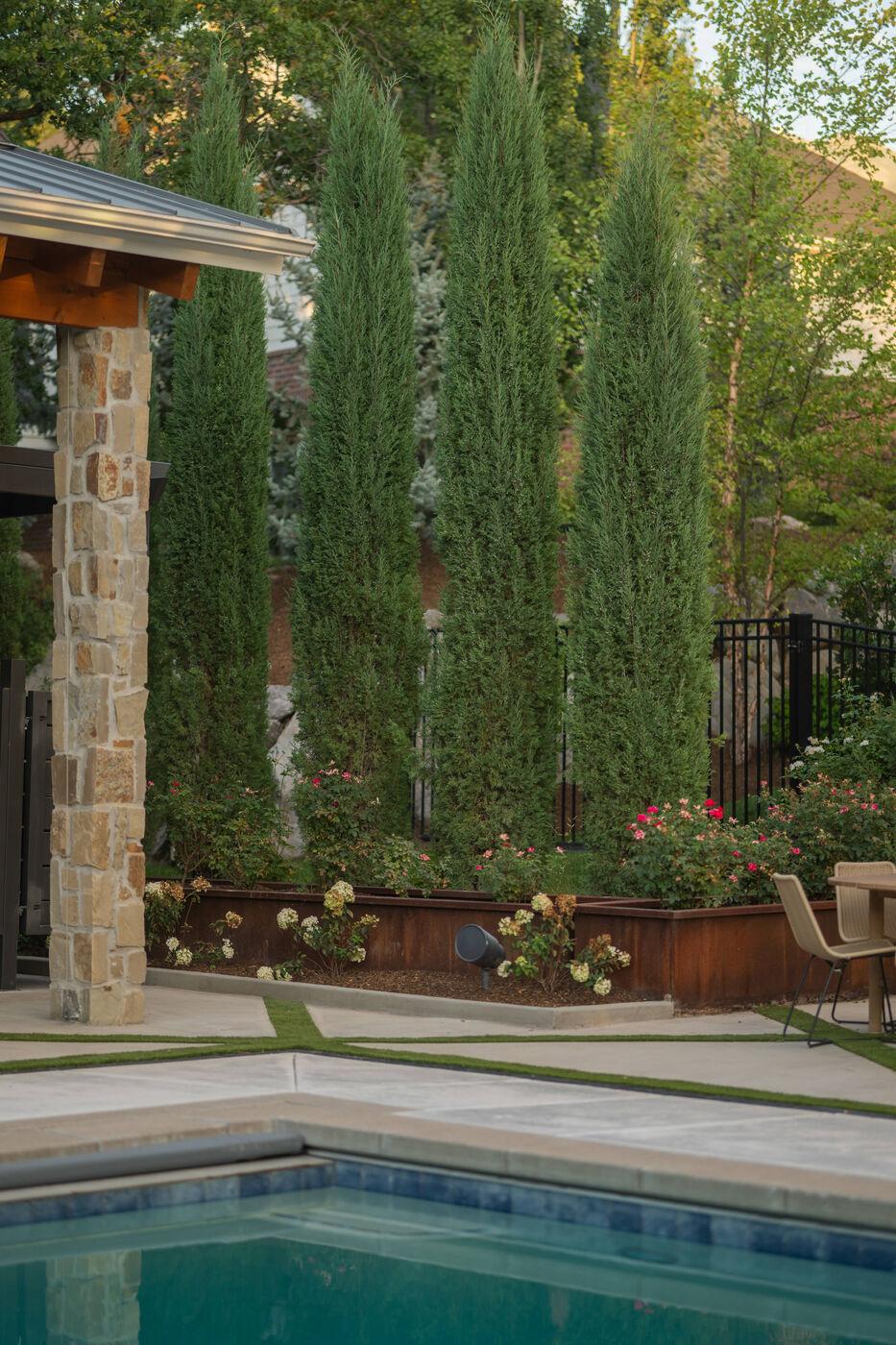
Mown edges throw clippings in the water and irrigation overspray carries fertiliser with them. A mowing strip, a paved margin, or planting chosen for the position keeps the edge clean.
- 04
Nothing sleeved under the deck
Lighting conduit, irrigation, and autofill lines have one cheap moment to cross the deck. After the pour, adding any of them means cutting finished concrete.
- 05
Planting chosen without the position in mind
Deck surrounds are hot, bright, and splashed. Species that shed heavily, fruit, or resent reflected heat and chlorinated splash become a maintenance problem within two seasons.
Materials & Method
How we build it instead.
- Falls set away from the coping
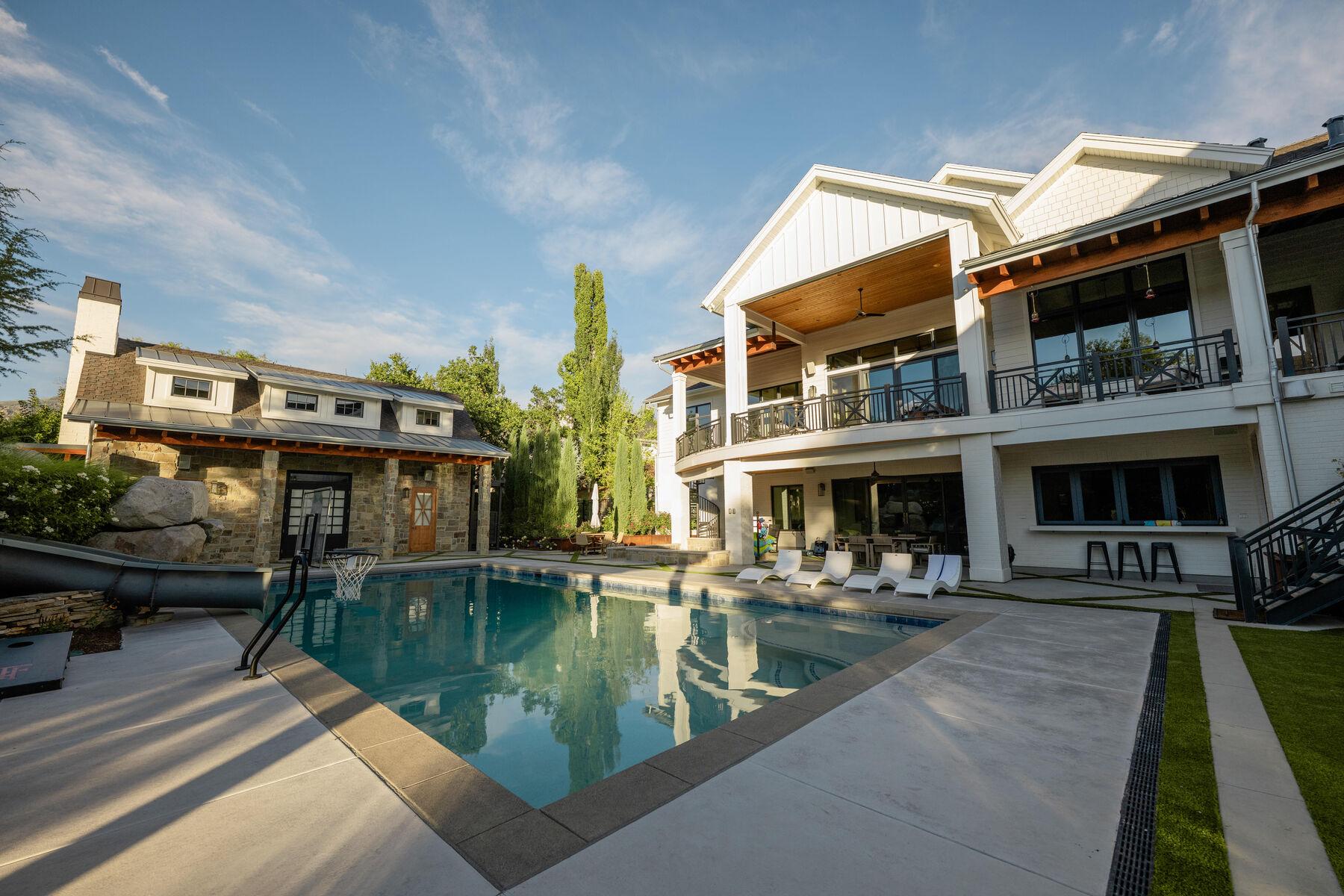
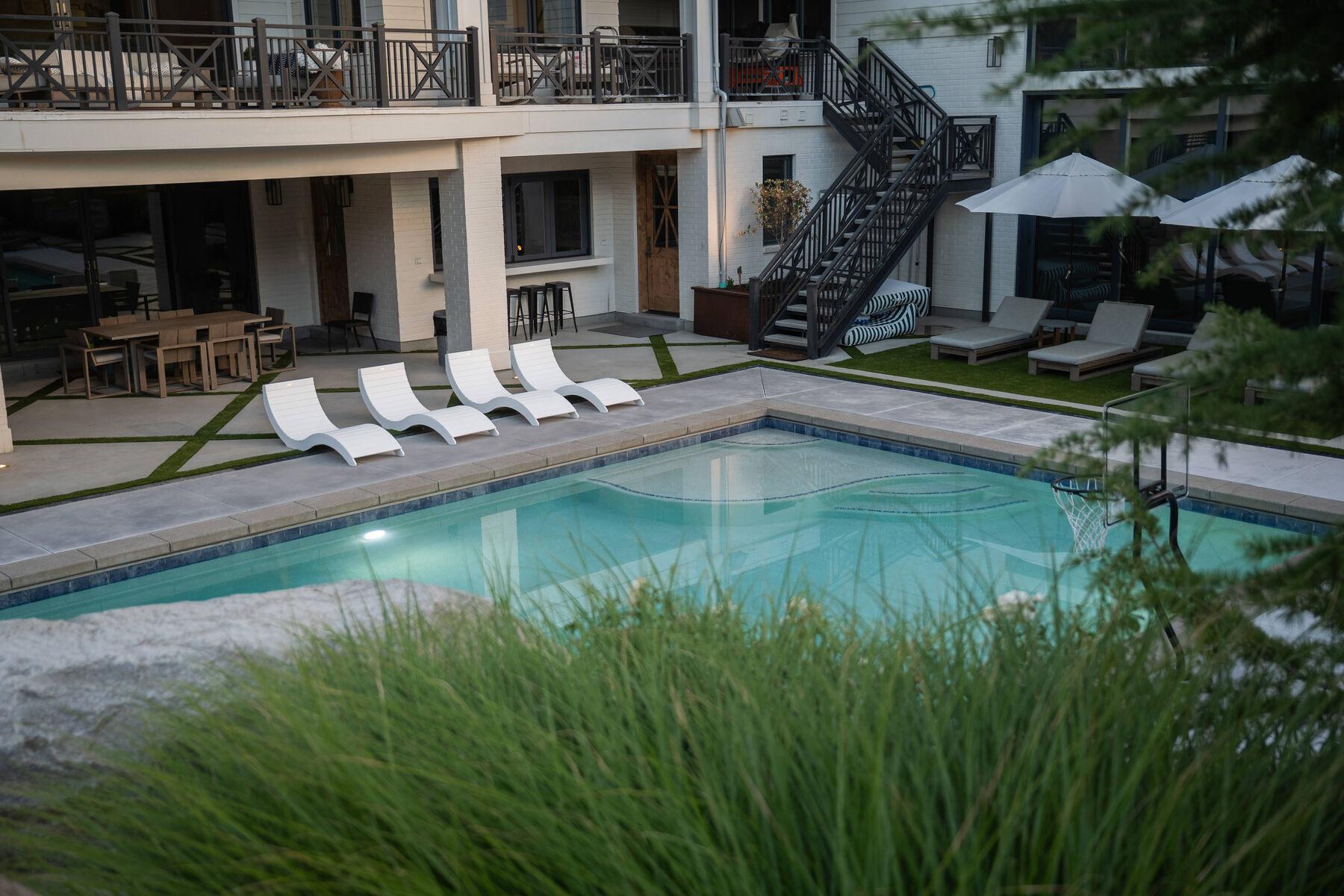
- Deck graded to shed away from the water at a workable slope, to a channel drain or a margin built to receive it rather than to the nearest low spot.
- Full-depth expansion joint at the shell
- Compressible filler through the depth of the slab where deck meets pool, sealed at the surface with a joint that can be maintained rather than one that has to be broken out.
- Sleeves and conduit before the pour
- Lighting conduit, irrigation sleeves, and autofill supply crossed under the deck while the base is open, capped and located on a drawing so they can be found later.
- Coping bedded, not floated
- Coping set on a full mortar bed to a string line, with the deck poured to it rather than under it, so the first course you see is the one that stays flat.
- A margin that keeps the edge clean
- A mowing strip, gravel margin, or planted band between deck and lawn, so nothing that is mown or fertilised meets the water directly.
Pools & Surrounds
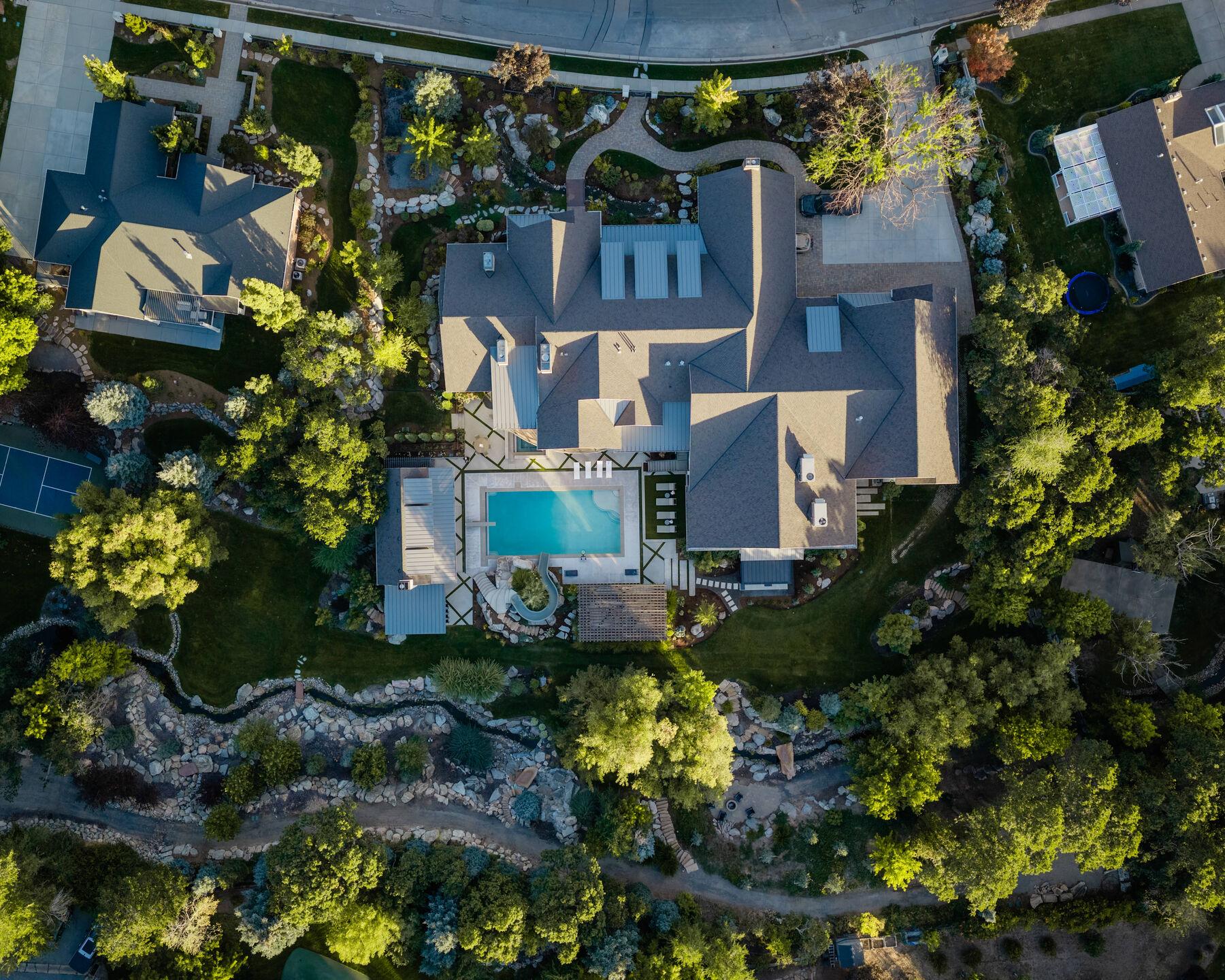
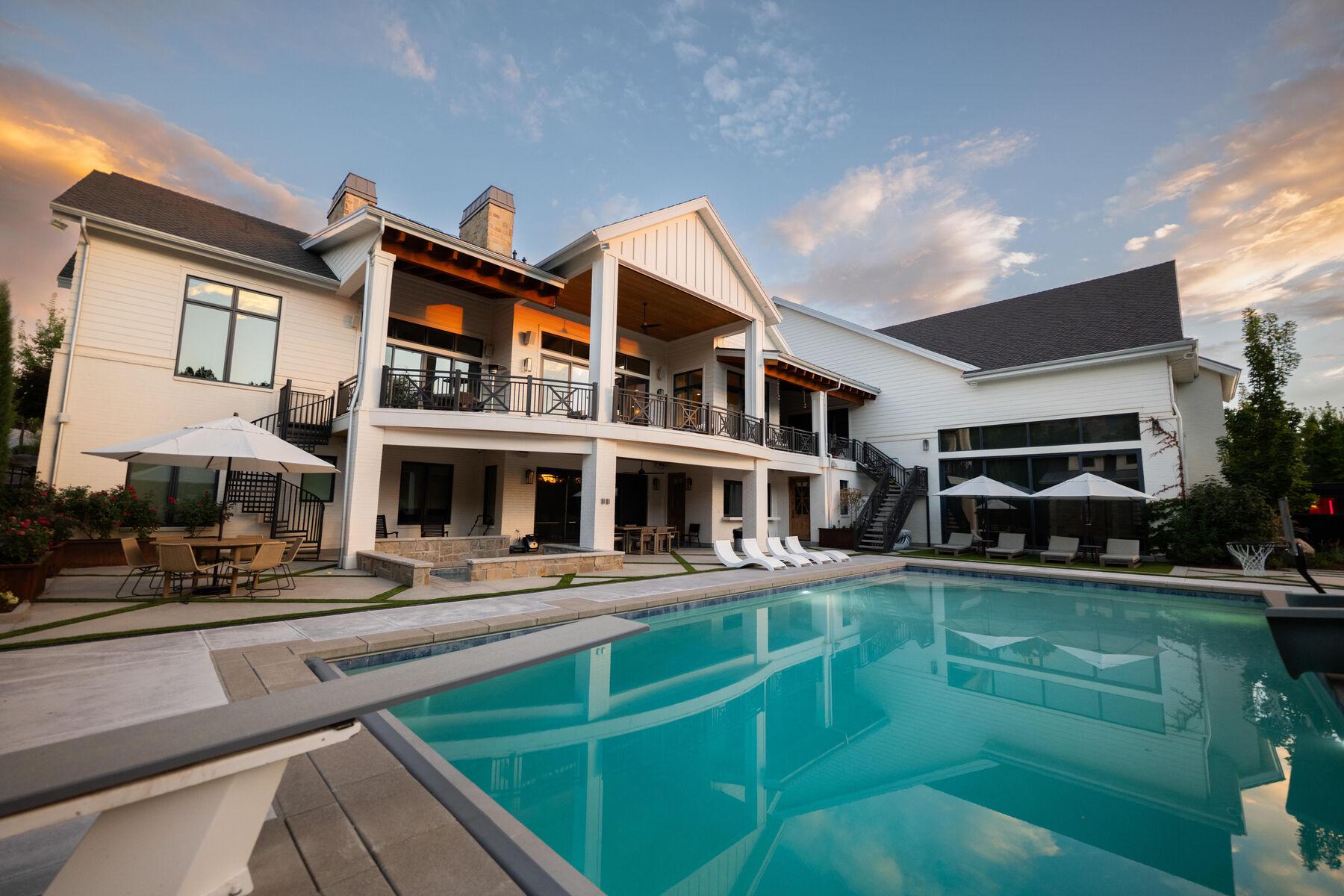
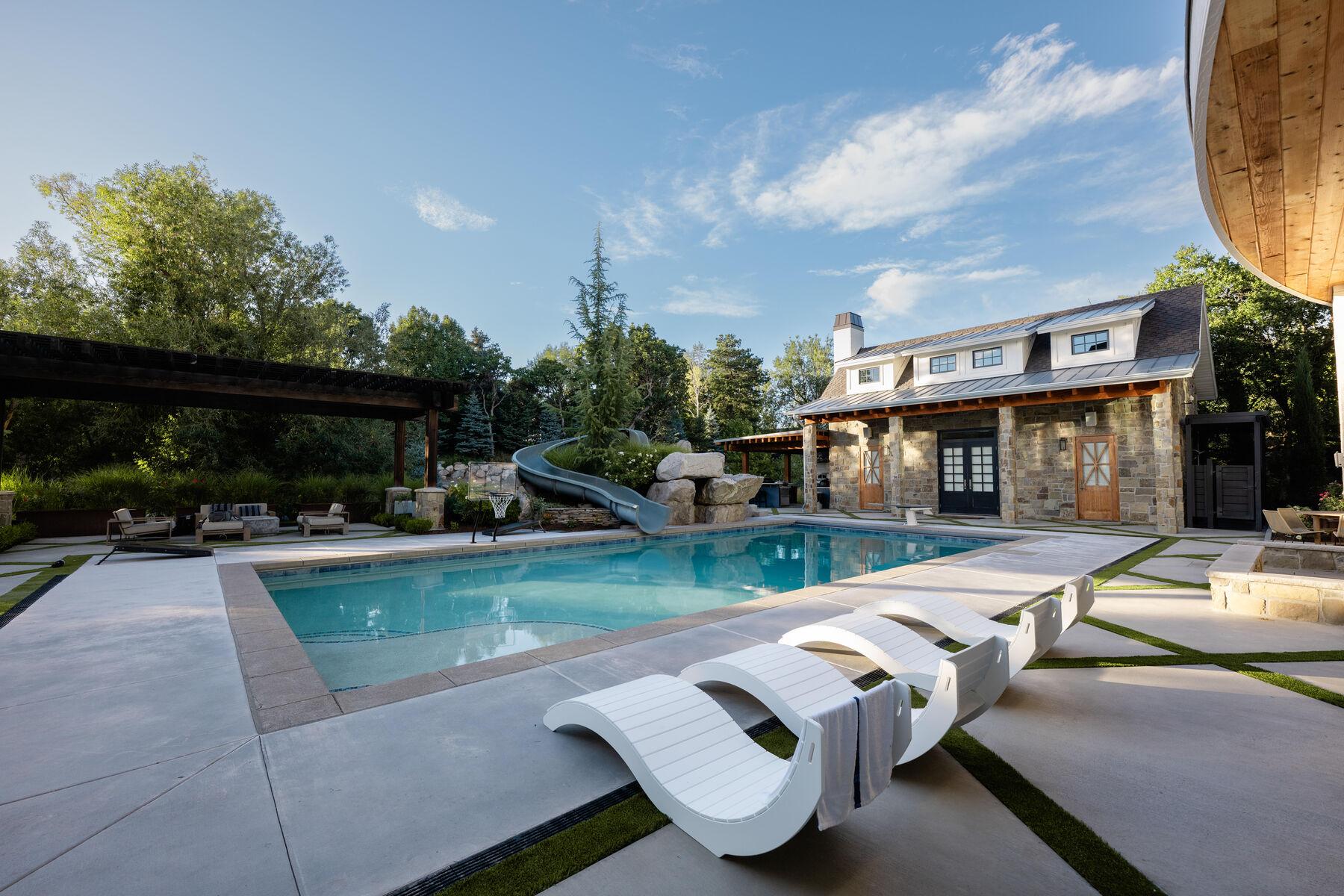
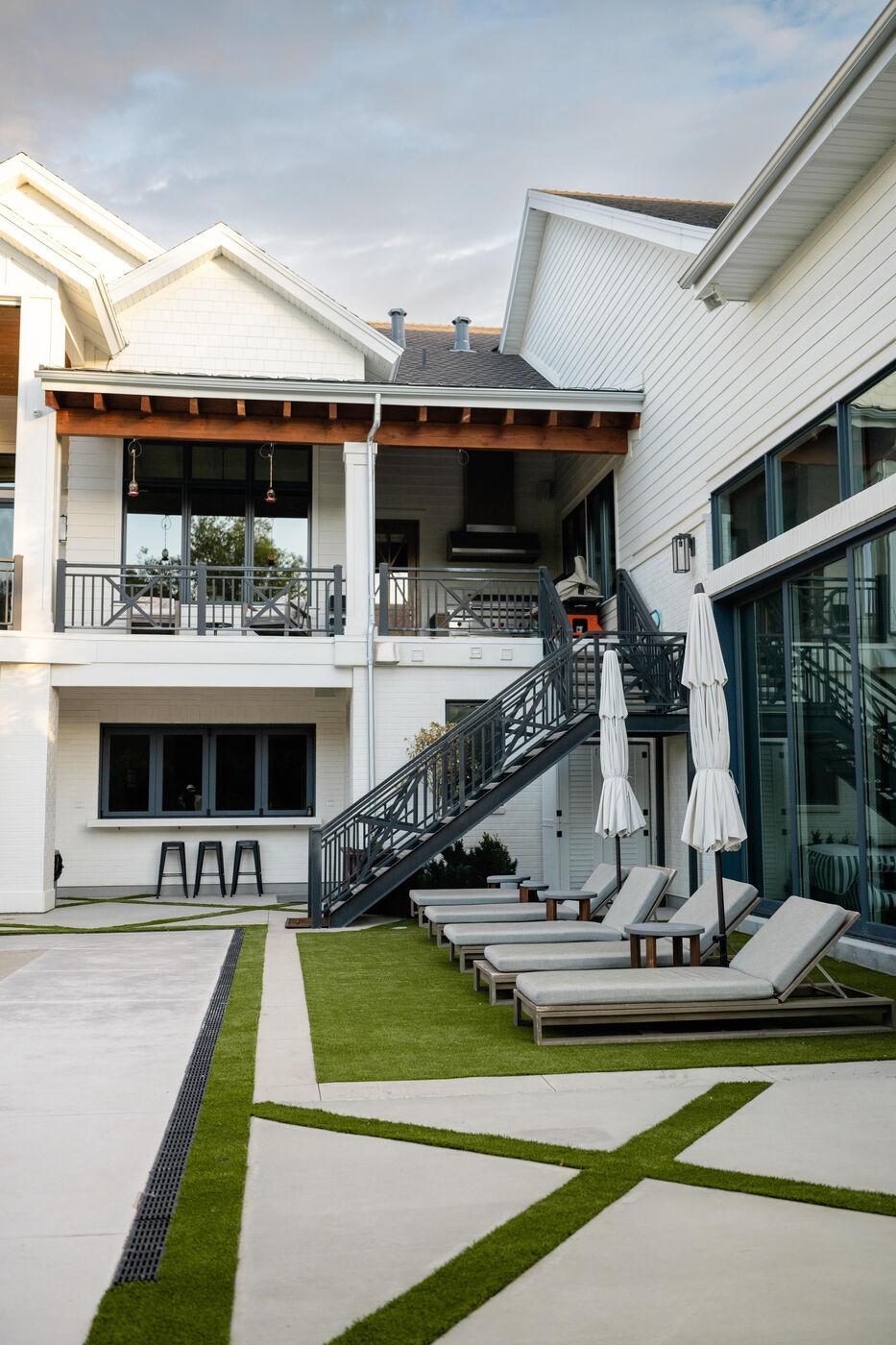
More of it, on real sites.
Common Questions
Pools & Surrounds, in practice.
- Do you build the pool itself?
- No. The shell, the plumbing, and the equipment are a licensed pool contractor's work, and we do not represent otherwise. We build everything around it — the deck, the coping, drainage, retaining where the deck meets slope, planting, and lighting — and we coordinate our sequence with the pool builder's so the buried work happens on the right day.
- Why does pool coping lift or crack after a few winters?
- Almost always because the deck was poured tight to the shell without a true expansion joint. The two structures have different masses and move differently through freeze and thaw, and if nothing compressible separates them they transfer that movement into whatever is weakest — usually the coping and the tile behind it. A saw cut does not solve this; it only scores the surface.
- Which way should a pool deck drain?
- Away from the water, always. A deck that falls toward the pool sends grit, fertiliser, and everything else on the surface into the water and onto the filter every time it rains. Falling away means committing to where that water then goes — a channel drain, a swale, or a planted margin sized for it — which is the part of the design worth spending time on.
- Can we run lighting or irrigation under the deck later?
- Only by cutting it. Conduit and sleeves cross the deck for effectively nothing while the base is open, and become a concrete-cutting job the day after the pour. On pool projects we ask for the lighting and irrigation intent early for exactly this reason, even where the rest of the design is still moving.
- What should go right up to the edge of a pool?
- Not mown turf. Clippings and irrigation overspray carrying fertiliser both end up in the water. A paved margin, a mowing strip, or planting selected for a hot, bright, splashed position keeps the edge clean and stops the filter doing work it was not meant to do.
- Does a pool surround need its own drainage design in this climate?
- Yes, more than in most. Northern Utah gives you freeze and thaw plus concentrated summer storms, so a deck is both a large impermeable surface and a structure that moves seasonally. Where its runoff goes has to be decided deliberately, or it finds the lowest point — which is often the pool, the house, or the neighbour.
Tell us about the ground.
A few questions about the site, the scope, and the budget you have in mind — then a conversation with the person who would actually run the job.
The Other Five
- Grading & DrainageWhere every yard is won or lost. Water moves first; everything else follows.
- Retaining WallsEngineered walls with drainage behind them, built to hold a hillside for decades.
- Patios & HardscapeStone set on a compacted base, jointed to survive freeze and thaw.
- Planting & GardensPlant palettes chosen for this climate — alpine wind, alkaline soil, short shoulder seasons.
- Landscape LightingLow-voltage lighting laid out for the evenings you actually use the yard.
- Water FeaturesBasins, spillways, and quiet water — plumbed and sealed to run without babysitting.