Builder & Developer Partnerships
Capacity you can schedule against.
Terrain Collective self-performs landscape installation for residential builders and developers across northern Utah. In-house crews, per-lot scheduling, one standard of detailing across an entire community, and warranty work handled by the crew that did the original install.
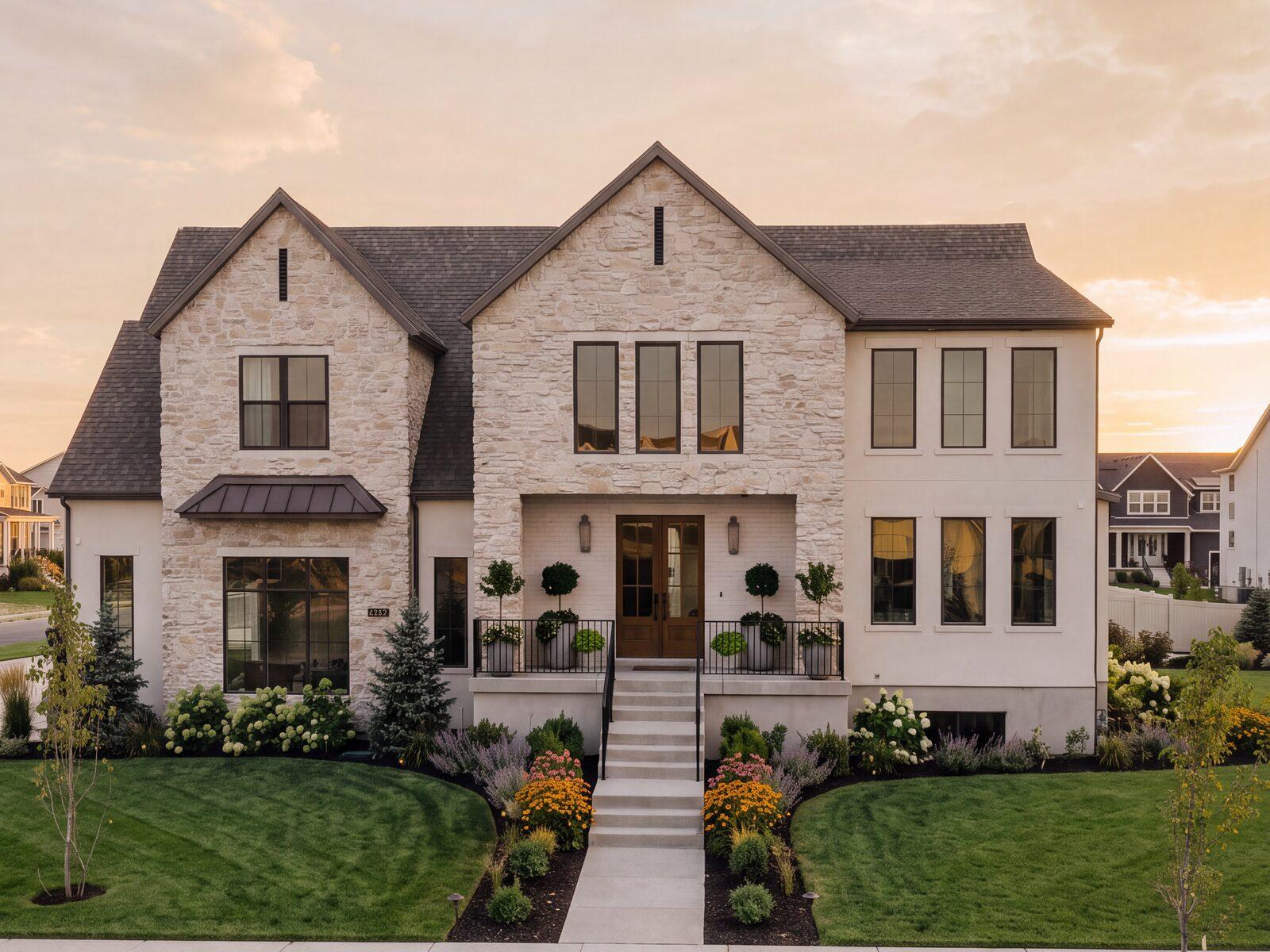
Self-performed, so there is nobody to point at.
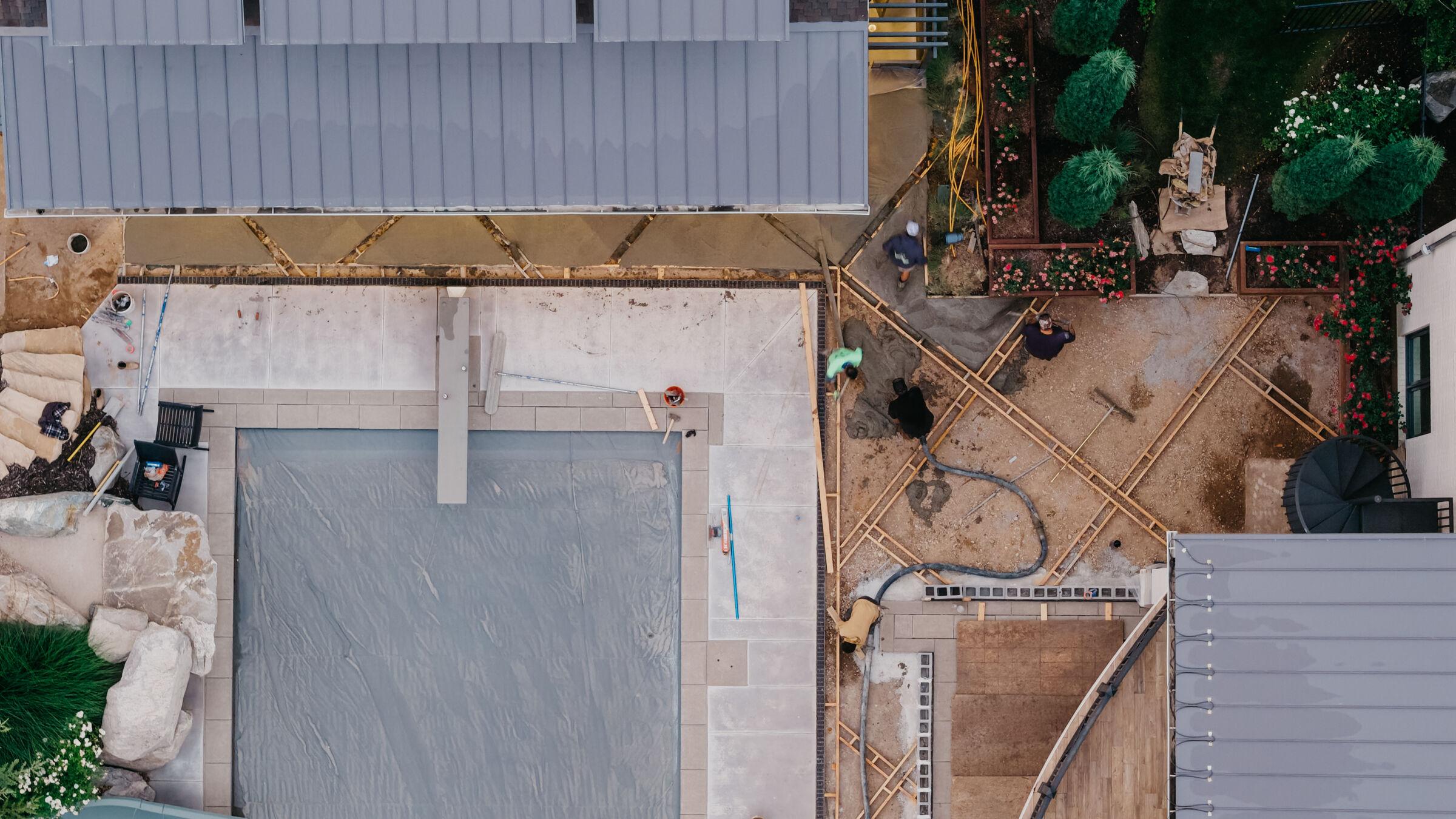
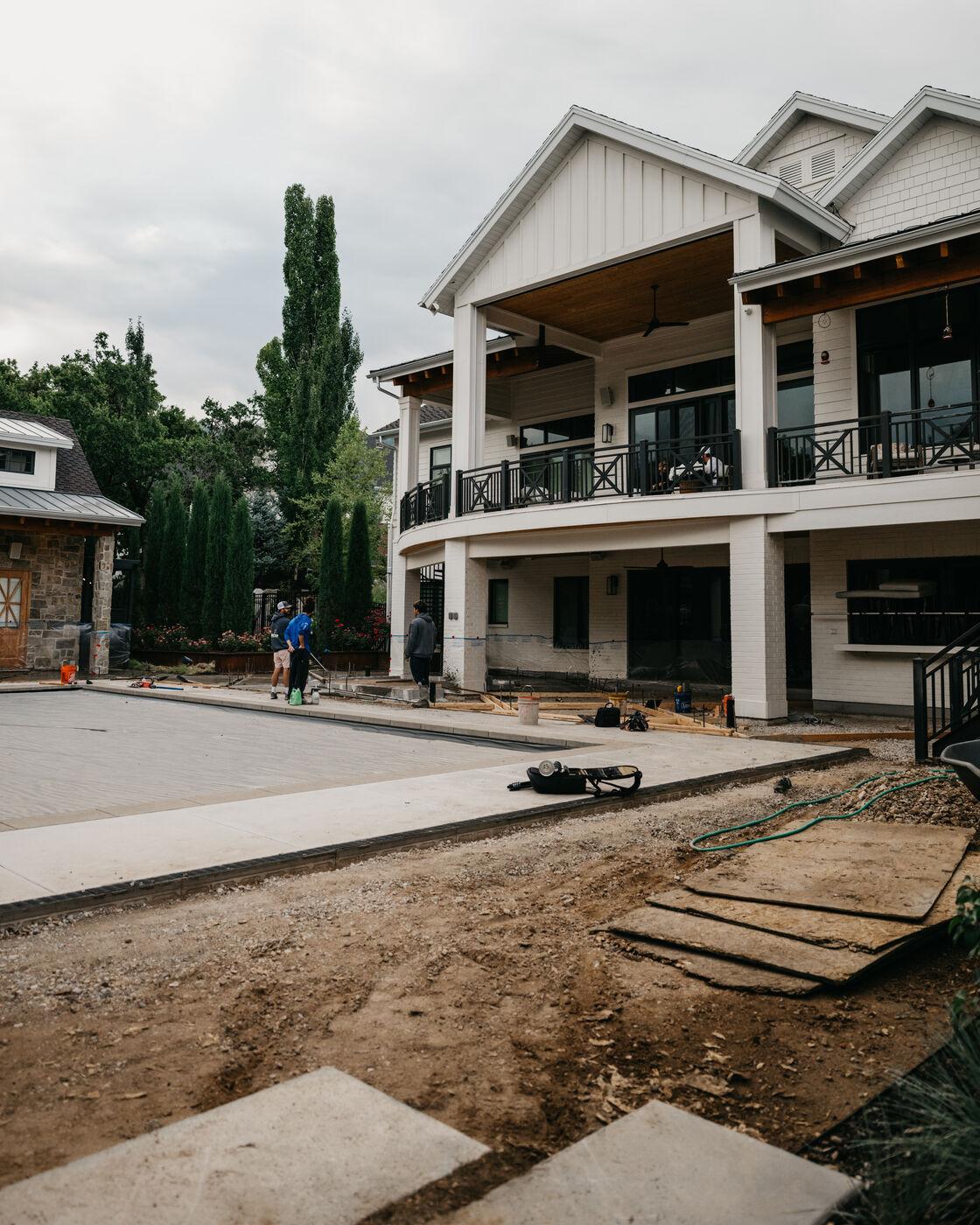
Grading, drainage, retaining, hardscape, irrigation, and planting are all done by our own crews with our own equipment. There is no second-tier sub arriving three weeks late, and no scope gap between two trades that becomes your problem at walkthrough.
Owning the equipment matters more in a compressed Utah season than it does anywhere else. When a window opens, we move into it without waiting on a rental yard, and when weather closes one, we are not paying to hold machines we cannot use.
The practical result for a superintendent is a single point of contact for the whole landscape scope — one schedule, one submittal source, one punch list, one warranty number.
How We Run a Community
Six things a builder actually has to trust.
The build itself is the same range of services and the same sequence we run on our custom residential work. What changes for a builder is the scale and the scheduling, not the standard.
- 01
Crew capacity
In-house crews, year-round, on our payroll.
We do not staff up per community and disband in November. Crews are employed through the winter, which means the capacity you are quoting against in February is the capacity that shows up in July — and the foreman closing out the last lot is the one who ran the first.
- 02
Per-lot scheduling
Sequenced against your closings, not our convenience.
Landscape is the last trade on a lot and the one most exposed to everything that slipped before it. We schedule per lot against your closing calendar, hold a rolling look-ahead, and flag a conflict as soon as we see it rather than on the day the crew fails to show.
- 03
Submittals
Returned by us, not by a supplier we are waiting on.
Product data, plant substitution requests, and material submittals come back from our office. Because we buy stone, aggregate, and nursery stock directly and in volume, we are not relaying a question down a chain and waiting for it to come back.
- 04
Consistency across a community
One standard, replicated, not reinterpreted.
Detailing is documented at the community level — base depths, compaction, edge restraint, irrigation heads, plant sizes — so the last lot released matches the approved model. Consistency across a street is what a buyer notices without being able to name it, and what an inconsistent installer costs you at walkthrough.
- 05
Punch-list responsiveness
Closed out by the crew that built it.
Punch items go to the crew that did the original work, not to a separate service division learning the site from scratch. That is the fastest route to a closed list, and it means the same people carry the consequence of their own detailing.
- 06
Warranty handling
One number, and we own the callback.
Warranty callbacks come to us and are resolved by us within the terms the contract sets. Because grading, hardscape, irrigation, and planting were all self-performed, there is no argument about whose scope a failure sits in — a question that otherwise consumes weeks and lands back on your warranty manager.
Who We Install For
Currently under contract.
Terrain Collective installs for JFisher Companies and Henry Walker Homes, a JFisher subsidiary.
Production work is not a phase we are trying to grow out of. It is the reason the crews are employed year-round and the reason the equipment is owned rather than rented, and it is run as a deliberate, permanent side of the business with its own scheduling and its own standards.
Coverage
Where we can take a community.
We install across four northern Utah counties. Conditions differ enough between them that we price and sequence each differently — a bench lot and a valley-floor lot are not the same install.
To Price a Community
What we need from you.
- 01
Plat, lot count, and the phasing you expect to release in.
- 02
Approved landscape plans, or the spec level you want us to price to.
- 03
Your closing calendar, or the look-ahead window you schedule against.
- 04
Site conditions we should assume — imported topsoil, stubbed irrigation, existing rough grade.
- 05
The submittal and warranty terms your contract carries.
Send what you have. If a plan set is not finished we can price to a spec level and tighten it later.
At Street Scale
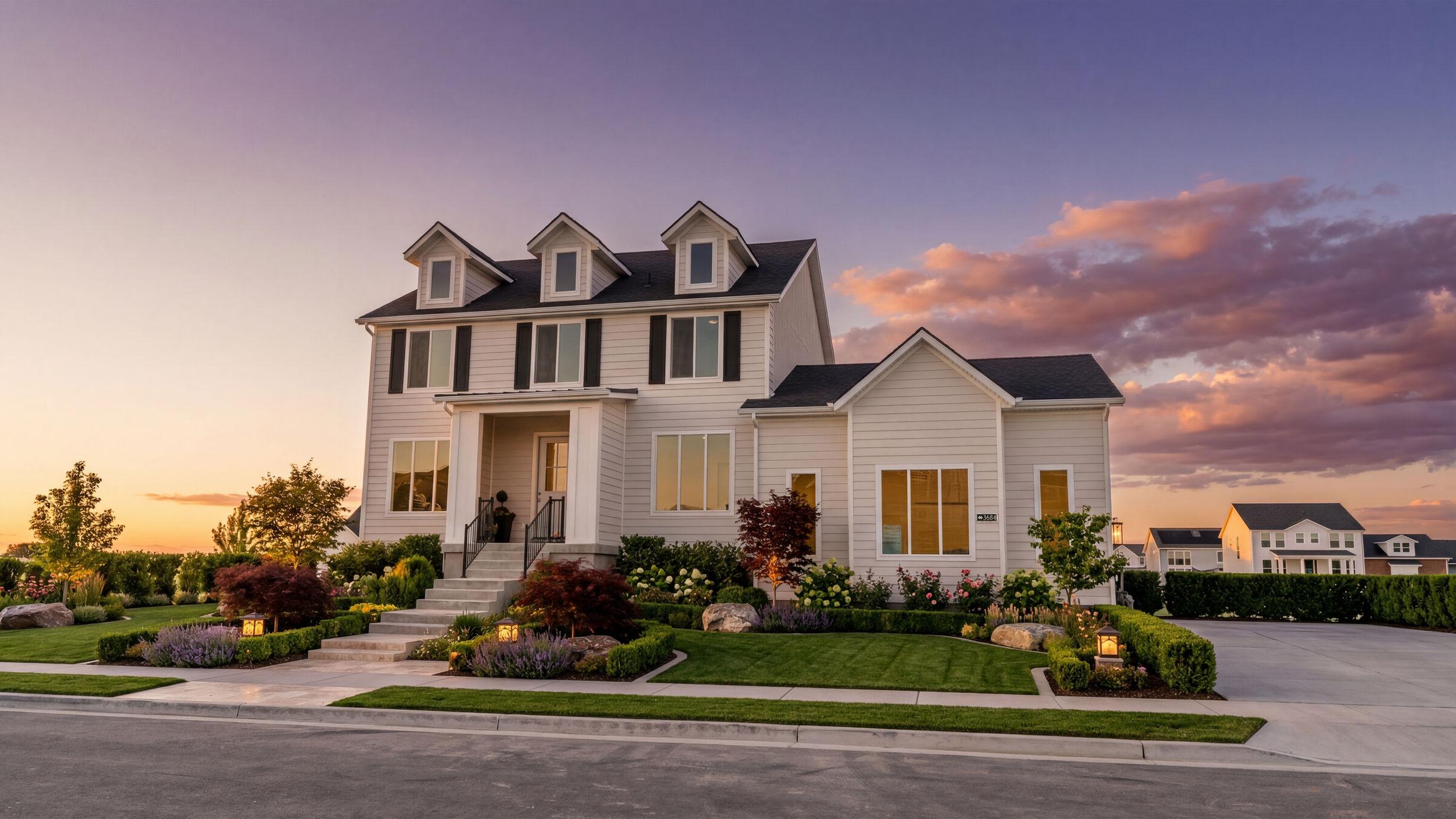
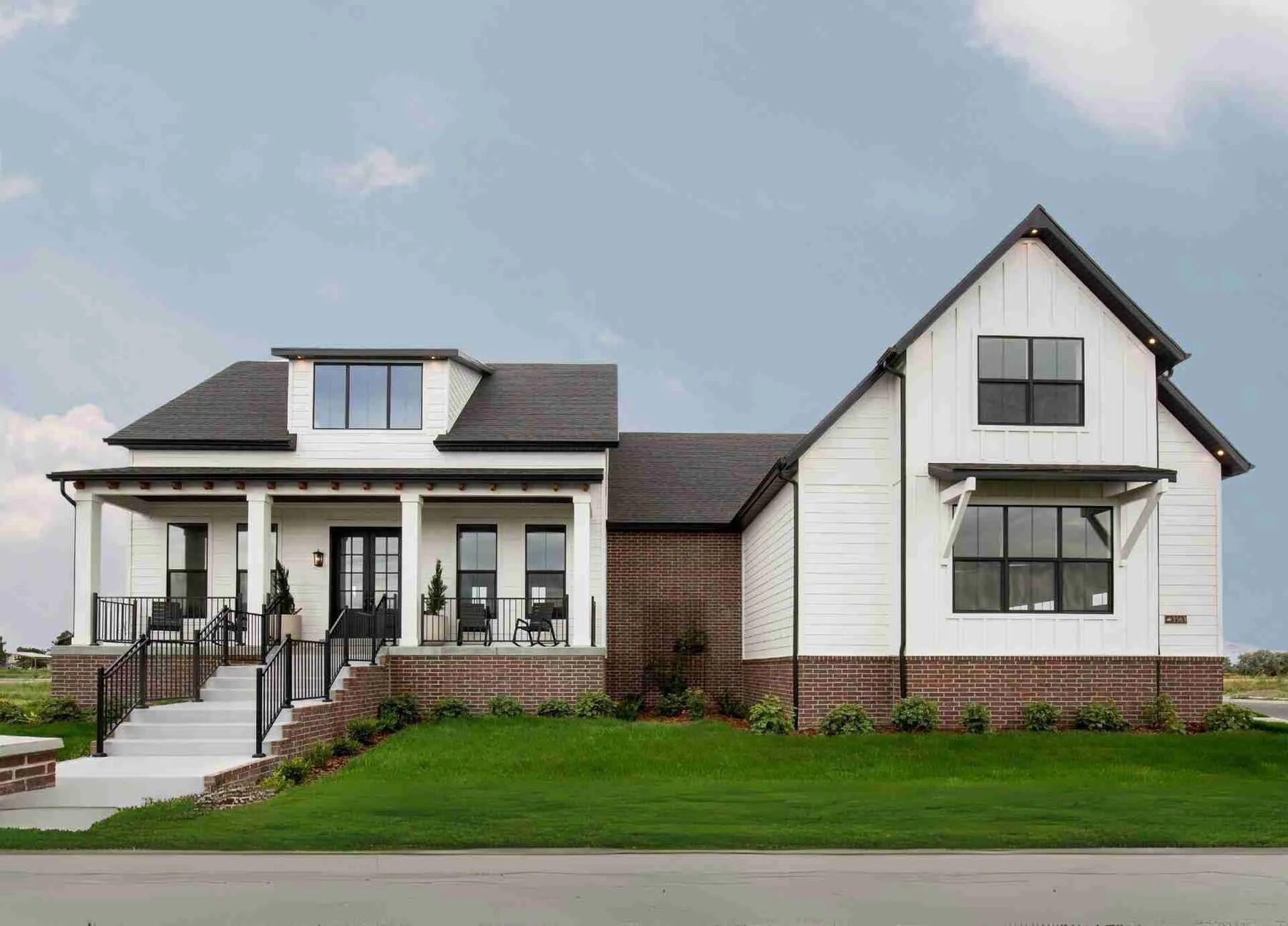
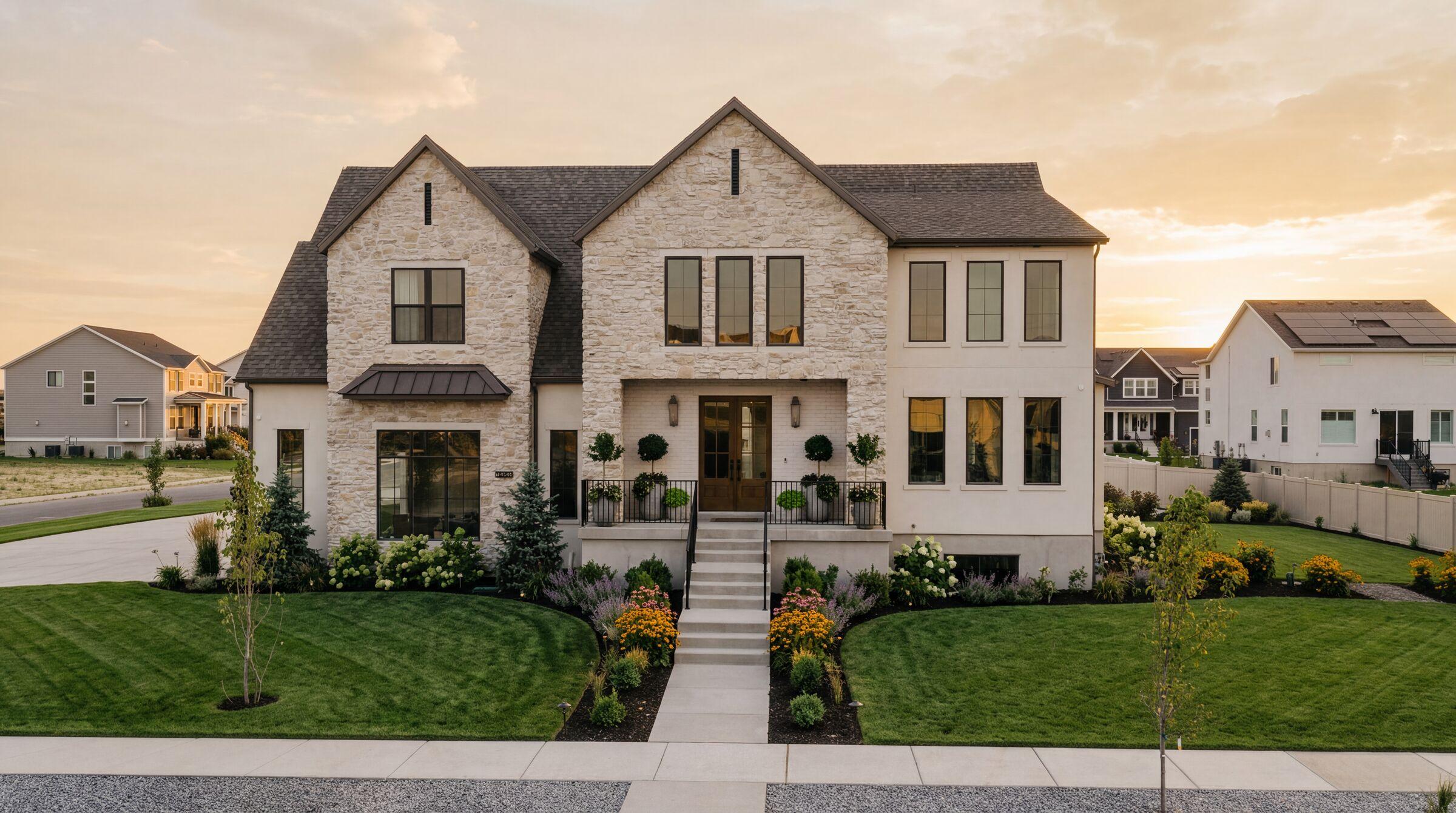
The elevation, finished.
Front environments as a buyer first sees them — grade, walk, lawn, and foundation planting resolved as one detail that repeats down a street without looking repeated.
Common Questions
Before you hand us a plat.
- How much crew capacity can you commit to a build?
- Our crews are in-house and employed year-round, so the capacity we quote against in February is the capacity that shows up in July. We do not staff up per community and disband in the autumn, and the foreman who closes the last lot is the one who ran the first.
- How do you schedule against our closing calendar?
- Landscape is the last trade on a lot and the most exposed to everything that slipped before it. We schedule per lot against your closings, hold a rolling look-ahead, and flag a conflict the moment we see it rather than on the day a crew fails to show.
- How are submittals and substitution requests handled?
- Product data, plant substitution requests, and material submittals come back from our own office. Because we buy stone, aggregate, and nursery stock directly and in volume, we are not relaying a question down a supplier chain and waiting for it to come back.
- How do you keep detailing consistent across a whole community?
- Detailing is documented at the community level — base depths, compaction, edge restraint, irrigation heads, and plant sizes — so the last lot released matches the approved model. That consistency is what a buyer notices without being able to name it.
- Who owns warranty callbacks and punch items?
- Both come back to the crew that did the original work, not to a separate service division learning the site from scratch. Because grading, hardscape, irrigation, and planting were all self-performed, there is no argument about whose scope a failure sits in.
- Is there a single point of contact for the landscape scope?
- Yes. One schedule, one submittal source, one punch list, and one warranty number for the entire landscape package, from rough grade through final planting.
Tell us the phase and the dates.
Lot count, release schedule, and the spec level you are building to. We will come back with capacity and a sequence, not a brochure.
Request Capacity