Landscaping in Midway, Utah
Mineral ground, spring water, and a village that reviews its own look.
Midway was first called Mound City, for the tufa mounds the hot springs built up out of the valley floor — the same geology that made Homestead Crater and that still turns up as calcareous rock in a Midway excavation and nowhere else we work. The Swiss farmers who settled it left a village that now holds new work to its own Swiss-European character, and Snake Creek runs through the middle of it, feeding the Provo and keeping the ground below it wet.
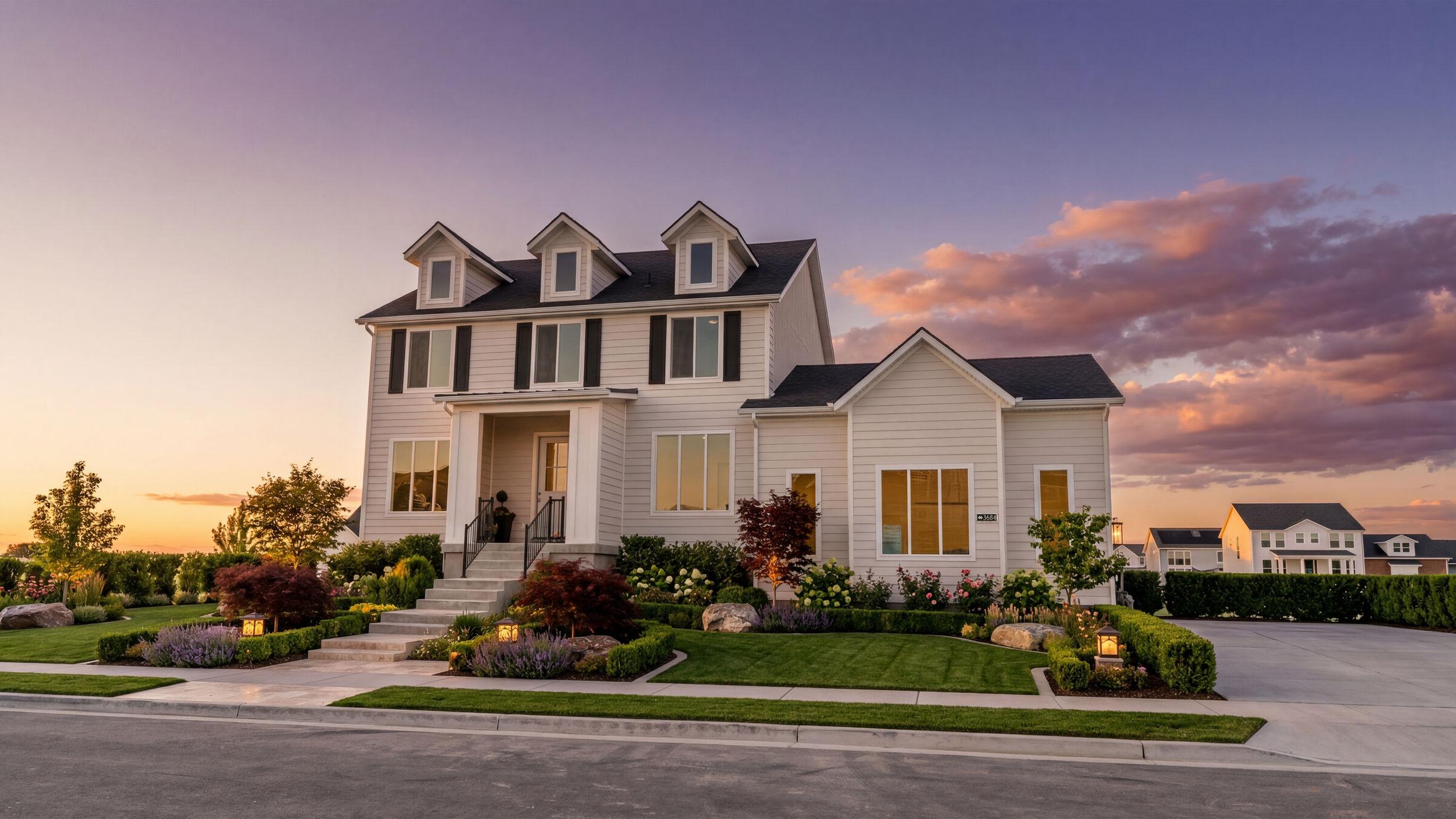
The Ground in Midway
What this site is going to ask for.
Elevation
5,600 ft
- Climate
- Midway shares the Heber Valley floor and its cold nights — the same still-air drainage pools frost on the flat at 5,600 feet — but the geothermal springs give it microclimates the rest of the valley does not have, pockets of warm, wet ground where the thermal water surfaces. Summers are dry and bright and the last frost holds into May, while the ground near Snake Creek and the springs stays cold and saturated well after the rest of the valley has drained and warmed.
- Soil
- The signature here is calcareous: tufa and travertine laid down by mineral springs over thousands of years, so a cut can hit free-draining porous rock in one spot and cold spring seepage a few feet away. The lime-rich ground runs even more alkaline than the alluvial soils across the valley in Heber, which sharpens the iron-chlorosis risk in the wrong plant and rules out acid-loving species outright. Where the springs surface, the drainage problem is not runoff but groundwater rising from below.
- Terrain
- The town sits low and largely level on the valley floor, laced with the irrigation ditches and spring-fed creeks that have watered its pasture for generations. Building ground and wet ground sit close together — a dry pastoral lot can carry a spring line across one corner — so grading here is as much about intercepting groundwater as shedding surface water. Interlaken, wrapped on three sides by Wasatch Mountain State Park above the town, is the steep exception to an otherwise gentle grade.
- Local
- Midway City reviews building and, in its commercial and resort zones, holds new work to a Swiss-European architectural theme — exposed structural timber, alpine detailing — a design culture that carries into how a landscape is expected to read. Secondary irrigation comes through the Midway Irrigation Company as pressurized shares, with its own valve, blow-off, and lateral requirements to design to. And because so much of the ground is spring-fed, a soils and groundwater read comes before the grading plan, not after.
Where in Midway
We build across the whole city.
From bare-ground new builds to established gardens being rebuilt, across these Midway neighborhoods and the streets around them.
- Interlaken
- Casperville
- Homestead
- Snake Creek
Near Homestead Crater, Wasatch Mountain State Park, Soldier Hollow, Memorial Hill.
What We Build in Midway
Seven disciplines, one crew, sequenced to this ground.
Every Midway project starts with grading and drainage, then runs through retaining walls, hardscape, planting, lighting, and water. In Midway that often means a waterwise approach from the first drawing.
Common Questions
Landscaping in Midway.
- What does Midway's calcareous, spring-fed ground mean for planting?
- The tufa and travertine that built the town leave the soil strongly alkaline, which locks up iron and turns the wrong species — silver maple, pin oak, rhododendron — chlorotic and yellow no matter how they are fed. We select lime-tolerant plants to that chemistry from the start, and where thermal spring water surfaces we treat rising groundwater as the drainage problem rather than surface runoff.
- Does Midway's Swiss-European design standard affect landscaping?
- In the commercial and resort zones the city holds exterior work to a Swiss-European theme, and even on residential ground that village character shapes what a landscape is expected to look like — restrained and alpine, built around timber and stone rather than against them. We design with that context in mind and confirm the review path with Midway City before installation.
- Our Midway lot has a spring or ditch on it — is that a problem?
- It is a design input, not a defect. Spring seepage and the Midway Irrigation ditches are common here, and they set where the wet ground is and where secondary water can come from. We map the groundwater before grading, intercept the spring lines that would otherwise undermine a patio or a wall, and put the irrigation shares to work on the planting.
- What does the first conversation involve?
- Where the lot sits, what the grade does, how you want to use the space, and the range you have in mind. We will tell you what the ground is likely to ask for before anyone talks about a design.
- Do you work year-round in Midway?
- Our crews run year-round. Installation concentrates in the April-to-October window when the ground is workable, while design, site reading, and scheduling carry on through the winter — which is the best time to get a spring start held.
Also in Summit & Wasatch County
Other areas we serve
Tell us about the site in Midway.
Where the lot sits, what the grade does, and what you want out of it. We'll tell you what the ground is going to ask for before anyone talks about a design.
Start a Project